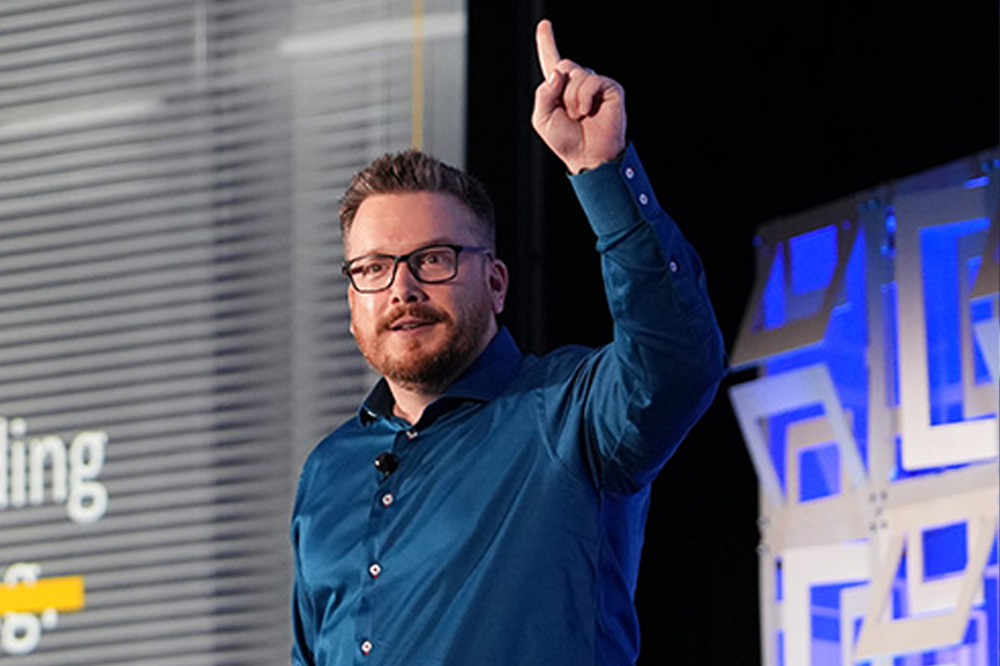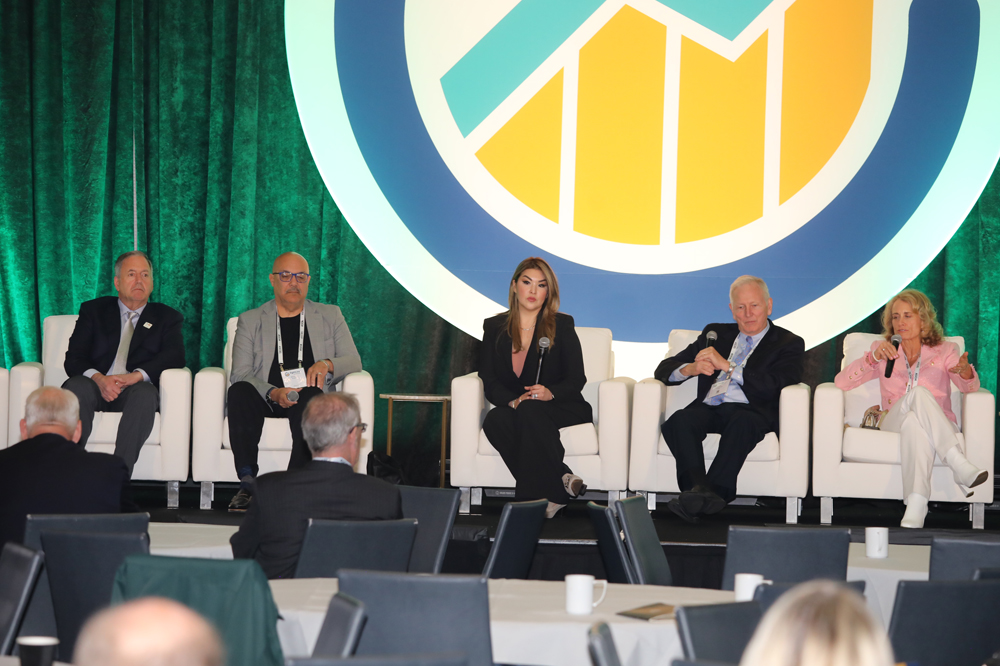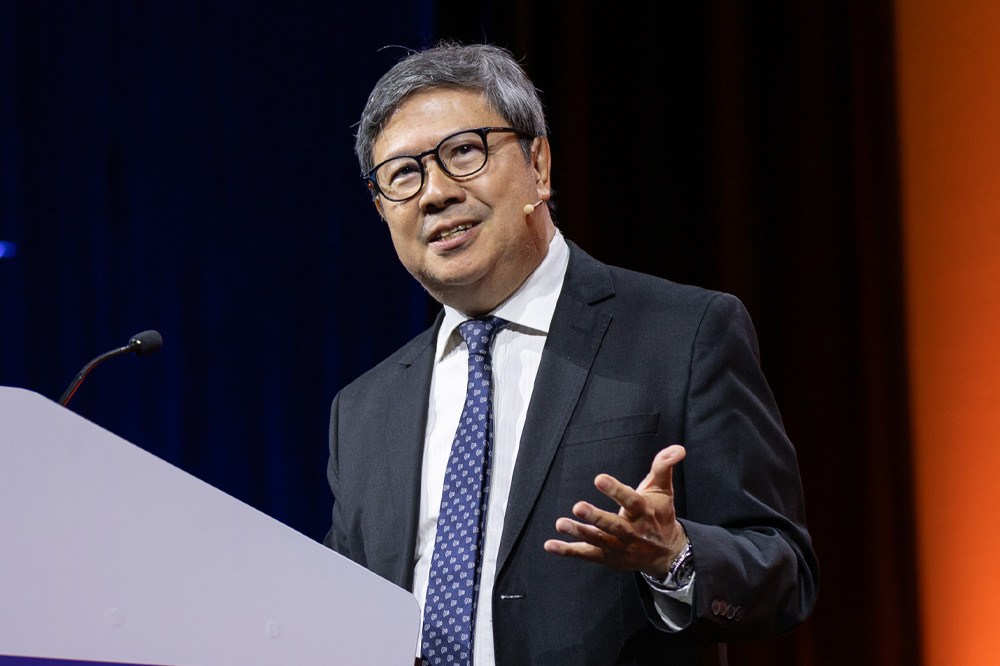
Afternoon sessions in ASCRS Cornea Day kicked off with the inaugural Holland Lecture, named for Edward Holland, MD, who delivered this year’s lecture.
Marjan Farid, MD, introduced Dr. Holland ahead of his lecture. The Holland Lecture will honor leaders and innovators in our field, Dr. Farid said, adding that there’s “no one more deserving to give the lecture” than Dr. Holland. “He’s an innovator and corneal surgeon who has done so much in advancing research and driving innovation in our field.”
Dr. Farid said if there is one way to describe Dr. Holland, it would be “selfless service.” This is the principle that has guided his career and entire way of life, she said, adding that Dr. Holland has dedicated his career to his patients, the ophthalmology community, his peers, and his mentees. She also noted Dr. Holland’s dedication to addressing severe ocular surface disease.
Dr. Holland then presented “Facing the Challenge of Managing Severe Ocular Surface Disease.”
Severe ocular surface disease is a significant unmet need. LSCD occurs in approximately 1–5 per 10,000, and given the U.S. population, that would affect approximately 35,000–170,000 people. A tremendous opportunity exists for these patients to regain vision with ocular surface stem cell transplantation, Dr. Holland said, however, ocular surface stem cell transplantation surgeries are rarely performed.
Dr. Holland asked audience members to weigh in on the most commonly performed procedure for this, which they correctly identified as PK, however, the success rate of PK in patients with total limbal deficiency is 0%.
Dr. Holland did a retrospective chart review from 2002–2024 in his clinic. This involved 1,598 eyes with LSCD who had improper management. These patients had a delayed diagnosis, wrong diagnosis, or the wrong treatment.
Dr. Holland shared a number of “misconceptions.”
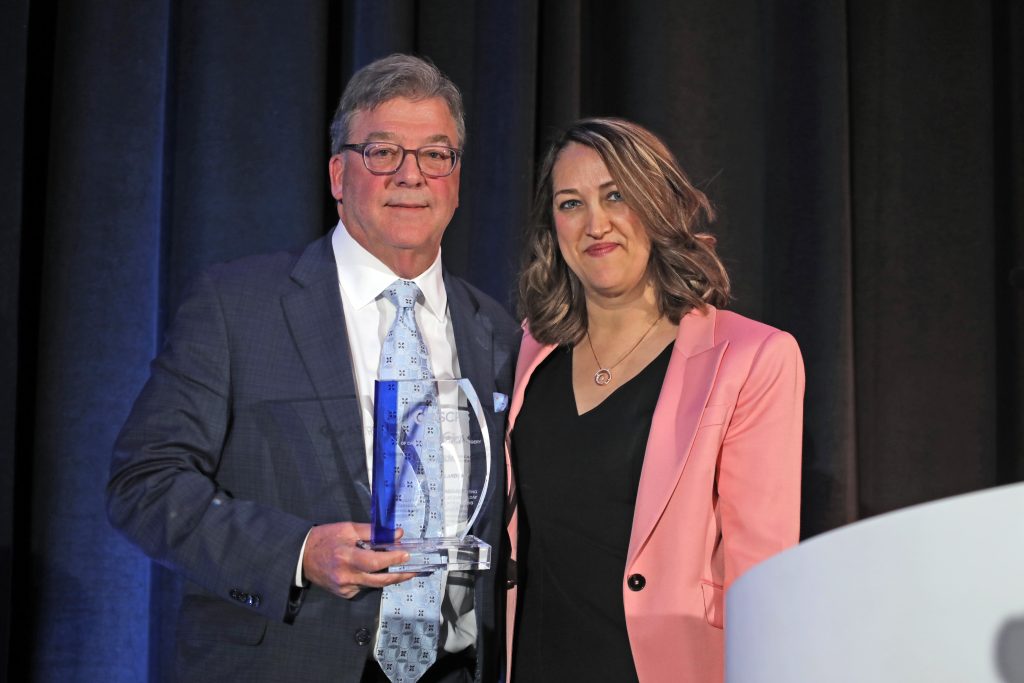
Source: ASCRS
Regarding severe OSD, misconceptions are:
- Aggressive “dry eye” treatments can prevent the progression of LSCD.
- PKs can be successful, and if they fail, it is reasonable to repeat.
- Superficial keratectomy and AMT can effectively treat severe OSD.
Regarding ocular surface stem cell transplants (OSST), misconceptions are:
- There is a poor success rate, and they fail early.
- Systemic immunosuppression has a high mortality rate.
- Obtaining CLAU or LR-CLAL has a high risk of inducing LSCD in the donor.
These are all false, Dr. Holland said.
“I began to realize our approach as a specialty is wrong,” he said, adding that he has made every mistake possible in managing patients with severe OSD, but he has also learned along the way. Cornea as a specialty continues to mismanage these patients, Dr. Holland said. There’s failure to properly diagnose, failure to learn and recommend appropriate treatments, failure to refer for appropriate treatments, and continuation of performing surgeries that are inappropriate and ultimately harmful for patients.
Looking at PKs for conjunctival/limbal stem cell deficiency, Dr. Holland said these will ultimately fail. The consequences of this are that patients will then be immunologically sensitized to corneal antigens and have a worse prognosis for OSST. Repeat PKs lead to worsening corneal and intraocular inflammation.
While Dr. Holland noted that he thinks the Boston KPro is a great therapy, he said it’s not the best primary therapy for these patients. Cornea complications are much higher in eyes with severe ocular surface disease, and complications can lead to loss of the eye.
He also mentioned SLET, adding that it is mostly done for unilateral chemical injuries. Disadvantages of SLET are that it provides a limited amount of limbal stem cells. If SLET is obtained and fails, it eliminates the option to use the donor eye for a CLAU. The main reasons surgeons perform SLET, he said, are because it’s easy and fast, it avoids taking larger tissue sections as in CLAU, and surgeons continue to propagate the myth that CLAU is a significant risk to the donor eye.
What is the status of OSST? Dr. Holland said OSST has excellent outcomes and is safe. He mentioned LR-conjunctival limbal allograft (donor is a living relative) and keratolimbal allograft (with a deceased donor).
Dr. Holland mentioned the importance of a coordinated team. Collaboration is critical for success. The corneal surgeon has to be the quarterback, but you need cornea, glaucoma, retina, and oculoplastics. You need to have a renal specialist help with difficult choices as well. The missing person who ties the whole team together is the transplant coordinator.
Discussing living related conjunctival limbal allograft (LR-CLAL), Dr. Holland said the advantages are that it allows for HLA matching, and it supplies conjunctival cells as well as LSCx. The disadvantage are that it is two procedures and does not supply 360 degrees of SC.
He noted a paper that showed systemic immunosuppression in OSST is safe in a 20-year period, adding that 270 patients were followed while on systemic immunosuppression. He said that 389 eyes underwent OSST, and there were no deaths and minimal severe adverse events. Cornea is the only transplant specialty that does not adopt systemic immunosuppression.
If OSST is safe and effective with long-term success, why are so few performed? Dr. Holland did note that it’s a challenging surgery, and reimbursement is much less than the routine keratoplasty patient. You also need good communication with internal medicine. These patients take considerable time.
In conclusion, Dr. Holland said that conjunctival/limbal stem cell deficiency patients have terrible quality of life due to blindness and chronic ocular pain. OSST with systemic immunosuppression was introduced more than 30 years ago, he said, adding that the surgical techniques have improved, valuable preoperative screening has been applied, and the systemic immunosuppression medications are safer and more effective.
However, there has not been a significant change in corneal surgeons’ behavior, and very few patients receive the proper care. As a cornea specialty, we must do better to understand this condition and offer OSST, he said.
Dr. Holland said he does not expect every corneal surgeon to perform OSST, but they should be able to correctly diagnose and recommend proper treatment. He thinks major ophthalmic centers should build OSST programs, and groups of corneal surgeons should collaborate to create regional centers to make OSST more accessible. Leading educational institutions and associations need to do more to make this a priority in education in proper diagnosis and treatment, he said.
Relevant disclosures
Holland: None