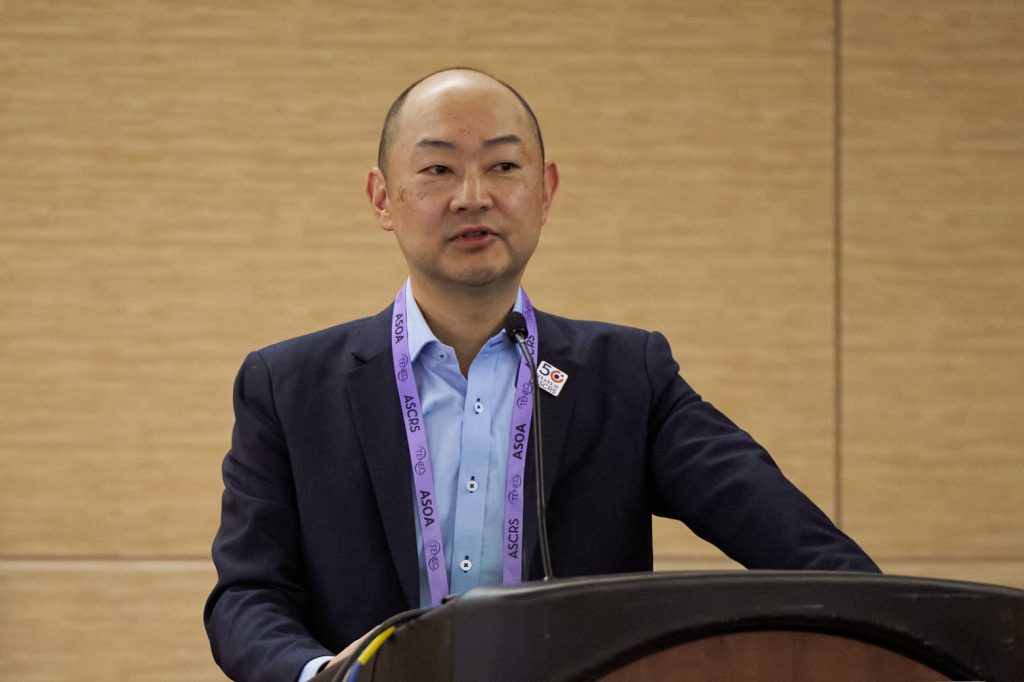
Joe Mull returned to the ASOA Annual Meeting for a third time on Saturday, April 26, as part of the Opening General Session, speaking this time about “EmployaltyTM.”
What most people in the workforce are doing right now, Mr. Mull said, is identifying what they want to do for most of their waking hours, what brings them the most joy, what can allow them to support the things they care about most (which often are not job-related).
“If you want to continue fulfilling your mission of providing world-class care … you need people to see [your] jobs as their dream jobs. I know that sounds daunting, but we know what it takes,” Mr. Mull said.
Practices need to figure out how to become destination workplaces that lead employees to join, stay, care, and try. Before getting into what’s on the “scorecard”—the conditions, what we have to get right—to become a destination workplace, Mr. Mull said we have to first talk about a few things “we must stop getting wrong.” These include a few myths that continue to persist about work and people in the workforce.

Source: ASCRS
Myth 1: Everyone’s been quitting. Mr. Mull presented data that showed while 134 people voluntarily left their jobs since 2022, there has also been 44% more hiring in the U.S. in every industry category. There’s been more hiring than quitting. “It’s not that everyone has been quitting—everyone has been switching,” he said. Why? For their quality of life. “What’s happening right now is that they are upgrading their quality of life. Now we have to ask what’s causing this,” Mr. Mull said.
Myth 2: COVID caused it. Mr. Mull said it isn’t COVID, but rather workloads have gone up. It’s not just the hours; it’s the amount, constant connectivity, expectations, and consolidation of many responsibilities into fewer people. Employees are getting away from work less and are not taking vacations for various reasons (everything from fear of falling behind to lack of disposable income to needing to bank time to care for family members in the future). Mr. Mull said there is also a “wages reckoning” happening the U.S. Work is up, time away from work is down, and the economics are not working for people. “COVID didn’t cause this,” Mr. Mull said. “COVID took an already exhausted workforce and broke it.”
Myth 3: No one wants to work anymore. This isn’t the case, Mr. Mull said. Rather, it’s “no one wants to work for you.” “We want to blame people instead of looking at the jobs and how those jobs allow [or don’t allow] for a reasonable quality of life.” When it comes to this myth being applied to the younger workforce, Mr. Mull said those newer to the workforce need patience and mentoring; they’re young. But no one has time for patience and mentoring anymore. “You have to flip the mindset that there’s a staffing shortage. There is no staffing shortage, there’s a great jobs shortage,” he said.
The era of simply trying to hire the best person for the job is over, according to Mr. Mull. “To become a destination workplace, you have to create the best job for the person.”
What does this look like? Where does commitment come from at work? “Commitment and retention appear when employees are in their ideal job, doing meaningful work, for a great boss,” he said.
The ideal job is about what the employee gets in exchange for the things they do. This includes compensation, workload, and flexibility. Meaningful work is what they spend their time doing, who they’re doing it with. This needs to have purpose, strengths, and a sense of belonging. Finally, a great boss involves someone you trust, who coaches, and who advocates on behalf of their employees. “We know an employee’s direct supervisor is the single most influential factor in the employee experience,” Mr. Mull said.
Finally, in addition to these three factors creating a destination workplace, the employer needs to understand that what is most important for their employees in their life is not necessarily their work. It’s their faith, family, and health, to name a few answers given from the ASOA crowd. Work matters because it’s how you provide for the things that mean the most to you, Mr. Mull said.
“If working for you negatively impacts what matters most to them, you’ve got no shot at being a destination workplace. You’ve got no shot at unlocking commitment,” Mr. Mull said. “If working for you positively impacts what matters most to me, then you’ve cracked the code. Then you’ve figured it out. … The path to retention and commitment runs squarely through quality of life.”
Employalty (Mr. Mull’s trademarked term) is not actually a mashup of the words “employee” and “loyalty” but rather is “employer,” “loyalty,” and “humanity,” he said.
“If you want people to commit to you, you have to commit to them,” Mr. Mull said. “You have to create for them a life they can’t get anywhere else.”