
The ASCRS Government Relations speaker at the 2025 ASCRS Annual Meeting was William Flanary, MD (aka Dr. Glaucomflecken). He was previously a guest speaker at the 2022 ASCRS Annual Meeting. During his time on the ASCRS Main Stage on Sunday, April 27, he spoke about the challenges facing the American healthcare system, the importance of advocacy, and how physicians can advocate for themselves and their patients.
Parag Parekh, MD, Outgoing Chair of the ASCRS Government Relations Committee, and Susanne Hewitt, MD, Incoming Chair of the ASCRS Government Relations Committee, introduced him to the audience.
We’ve been having some problems in the healthcare system recently, Dr. Flanary said, joking that the audience might not be aware of these problems.
He first got involved in advocacy when he attended the American Academy of Ophthalmology’s Mid-Year Forum in 2016. He noted that “the atmosphere was excitement” because the SGR had recently been appealed.
Dr. Flanary stressed that both social media advocacy and in-person advocacy are important.
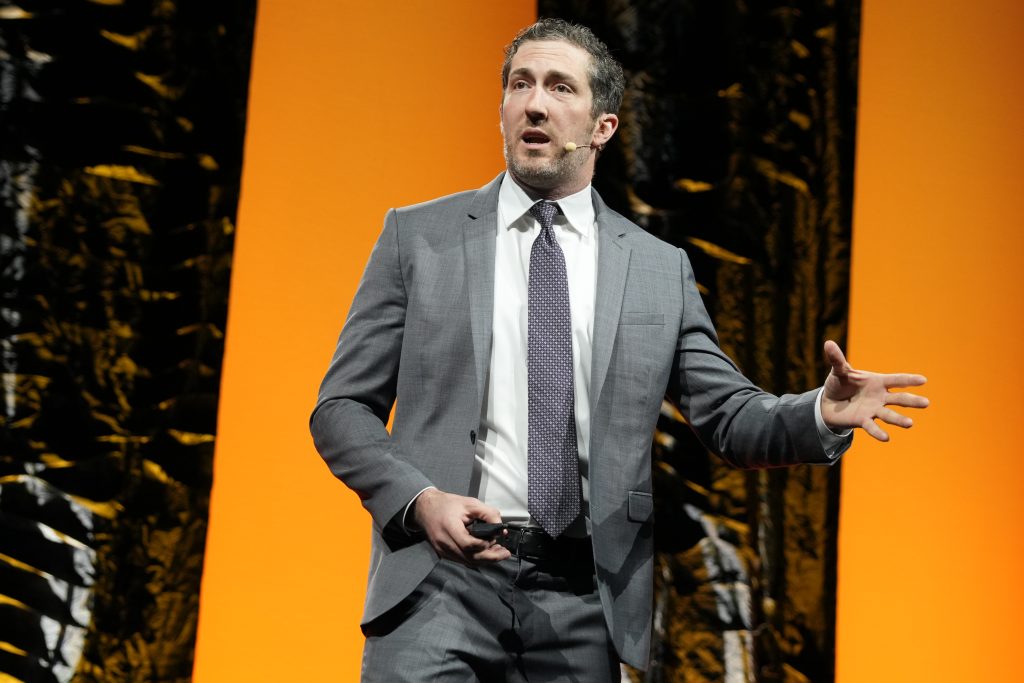
Source: ASCRS
As a resident, Dr. Flanary said he would often question, “Who am I to go talk to all these [legislators]?” but he said changes happen because physicians are telling their legislators about their experiences in the healthcare system. Don’t overestimate the legislators’ and general public’s knowledge of the human body and the healthcare system in general, he said.
What has changed in ophthalmology since 2016? Dr. Flanary said there is still a fight for reimbursement.
In preparation for his talk, Dr. Flanary reviewed the RUC process, noting that “you can always find new little things in the healthcare system that are making people miserable.” The committee is a group of physicians from all different specialties who come together with the goal of figuring out how much each of them should get paid and passing those recommendations on to the Centers for Medicare & Medicaid Services. That gets considered when it’s time to make reimbursement cuts. “As a physician, I’m horrified by this process,” Dr. Flanary said. “But as a comedian, I’m excited.” He added that things like time to complete the procedure, practice expenses involved, and specifics of the procedure all go into consideration.
If cataract surgery is thought of as quick and easy, then that could contribute to low reimbursement for us, Dr. Flanary said. Then, he joked, “What kind of idiot would go out and talk about how quick and easy cataract surgery is?” He showed a tweet he had shared of how little time it took to perform a case and a video of himself playing the roles of various physicians involved in the RUC process.
Dr. Flanary went on to describe a serious medical event he had in 2020 and the subsequent medical bills after. You can imagine what this is like for our patients, he said, as they are trying to put their lives back together, and they get the healthcare system dropped in their hands. He noted that he had around $20,000 worth of charges insurance was meant to cover but didn’t, so he had to call his health insurance company to get it straightened out. He joked that he made a mistake in that he “didn’t check first” that the providers he was taken to in this emergency situation were in-network. The 9-month battle he went through in order to be charged the correct amount ultimately changed his comedy content, and he started speaking about medical issues.
Dr. Flanary said there are two big things to effectively advocate for change. The first is you have to know there’s a problem. Based on the public reaction to his videos, Dr. Flanary thinks people know. The second thing is they have to know what the problems are. “There’s disconnect between what we know as physicians and what the public knows about how healthcare works,” he said.
He also offered several tips on how to advocate through storytelling, appealing to emotion, crossing platforms, and donating money. Storytelling is so important, he said. We can give stats to people until we’re blue in the face, but they don’t care. They do care about what appeals to their emotions, he said, adding the ophthalmologists and physicians in general can tell stories about “how the healthcare system has impacted our patients and us.” We need to have a presence in person and on social media. And obviously, advocacy needs money, he said, encouraging ophthalmology to catch up on this front.