The Richard L. Lindstrom, MD, Lecture and Medal honors individuals who have made significant contributions to one of the areas of Dr. Lindstrom’s ophthalmic interest. Dr. Lindstrom has significantly influenced the main subspecialties in anterior segment surgery including cataract, cornea, refractive, and glaucoma. In addition, Dr. Lindstrom has fostered and promoted industry collaboration with ASCRS.
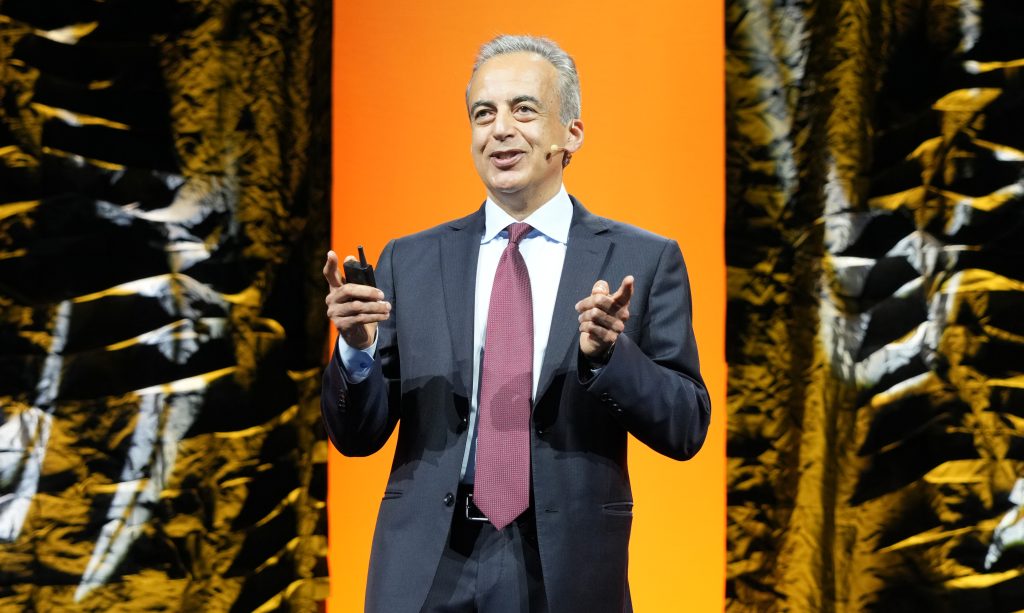
This year’s Richard L. Lindstrom, MD, Lecture was given by Reza Dana, MD.
Marjan Farid, MD, introduced Dr. Dana, noting that he began his work as a medical student doing research in corneal transplantation. After undertaking ophthalmology, Dr. Dana continued his research interests in molecular and cellular regulation of corneal and ocular surface immunity in transplantation, autoimmunity, wound healing, and regenerative medicine approaches to corneal disease. Dr. Dana has more than 500 peer-reviewed publications, numerous awards, grants, and is currently the Editor in Chief of the Cornea journal. He has trained 150 research post-doc and graduate students and has trained 100 clinical fellows.
Dr. Dana took the stage with Dr. Lindstrom to accept his award. He noted that, “Dr. Lindstrom has been a role model for so many of us. … His name is synonymous with innovation in ophthalmology.”
The thesis he explored in his lecture was that neuropathy and inflammation are the fundamental mechanisms that co-conspire to induce corneal disease. One amplifies the other, leading to corneal disease. Dr. Dana said that common manifestations include pain and redness, dry eye, angiogenesis, and endothelial disease.
Source: ASCRS
One of the take-home messages in his lecture was that the cornea is more than just a slab of collagen—there’s much more to it. The cornea is a dynamic multi-system regulator of biological responses.
We know that immune-based epitheliopathy that we see in common and uncommon conditions is intricately related to neuropathy, Dr. Dana said, adding that neuropathy can lead to stem cell dysfunction. He discussed the correlation between corneal nerve loss and epitheliopathy. The more severe the OSD, the more severe the neuropathy.
The core orchestrators of early epithelial and nerve pathology are resident immune cells of the cornea. The corneal is replete with a unique MHC II-negative resident immune cell population, Dr. Dana said. Corneal immune cells interact with epithelial cells, blood vessels, lymphatics, and nerves to regulate function.
What are the key ingredients that define the complex pathologies we see as clinicians? Dr. Dana noted pain and inflammation.
He discussed one of the principal drivers of pain in OSD being the pathway P/NK1R, and he shared studies that have shown that topical NK1R agonists can suppress dry eye disease-associated pain in mice.
Corneal neovascularization is both a result and promoter of inflammation. Corneal angiogenesis is a common outcome of corneal inflammation. It amplifies corneal inflammation because blood vessels are the main conduits of immune cells. The denervated eye has a significant reduction in the threshold for angiogenesis, he said.
What is the connection between nerves and corneal endothelial health? Dr. Dana said this area was perplexing at first. He mentioned the interface of the melanocortin system with immunology and regenerative medicine.
When you see patients who have signs of neuropathy, epithelial disease, inflammation, you want to be able to intervene early. For epithelial disease, he suggested providing lubricants and ocular surface optimization; for neuropathy, he suggested biologics; and for inflammation, he suggested anti-inflammatories. You need to control the pathology early and stop the cycle, he said.