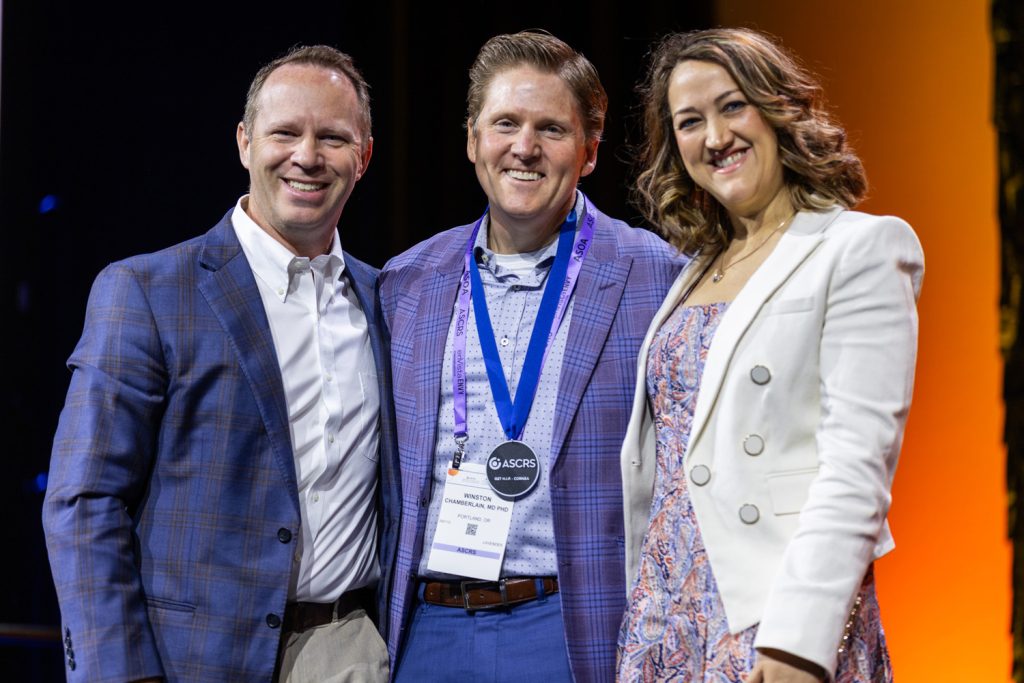
The symposium sponsored by the Journal of Cataract & Refractive Surgery focused on controversies in anterior segment surgery. The session was moderated by William J. Dupps, MD, PhD, and Sathish Srinivasan, MD.
Dr. Dupps began the session by introducing this year’s awards, which he said highlight some of the papers that were particularly impactful.
JCRS Rosen Award for Technique Paper
Howard V. Gimbel, MD, MPH, FRCSC
“Haptic tuck for reverse optic capture of a single-piece acrylic toric or other single-piece acrylic intraocular lenses”
JCRS Obstbaum Award for Full Length Article
Emma Friling, MD
“Endophthalmitis after cataract surgery and effect of different intracameral antibiotic regimes in Sweden 2011–2017: national registry study”
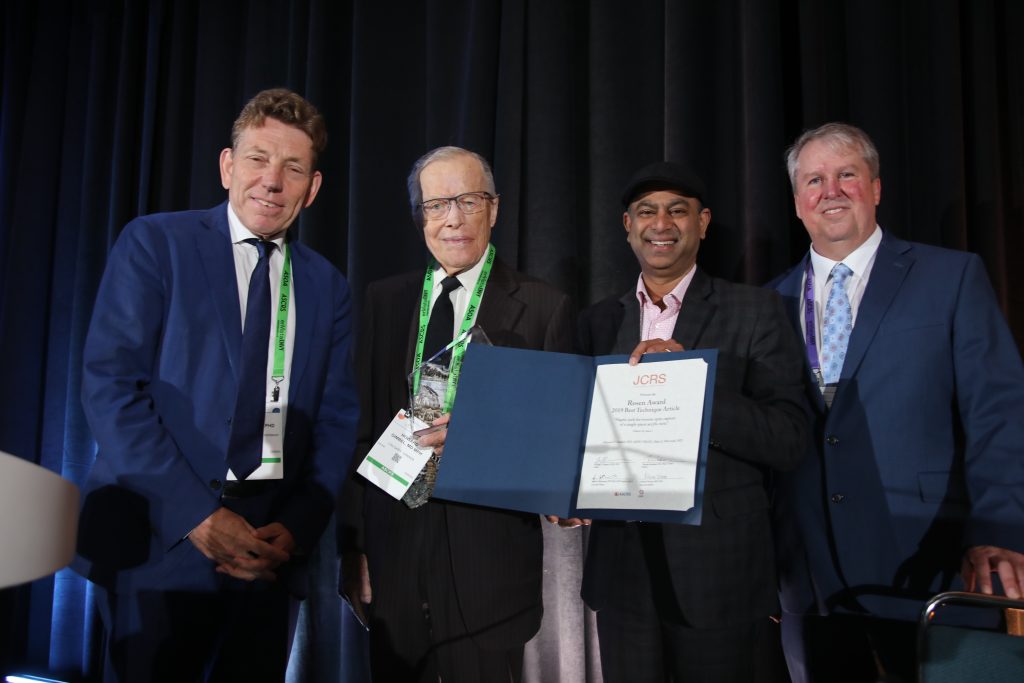
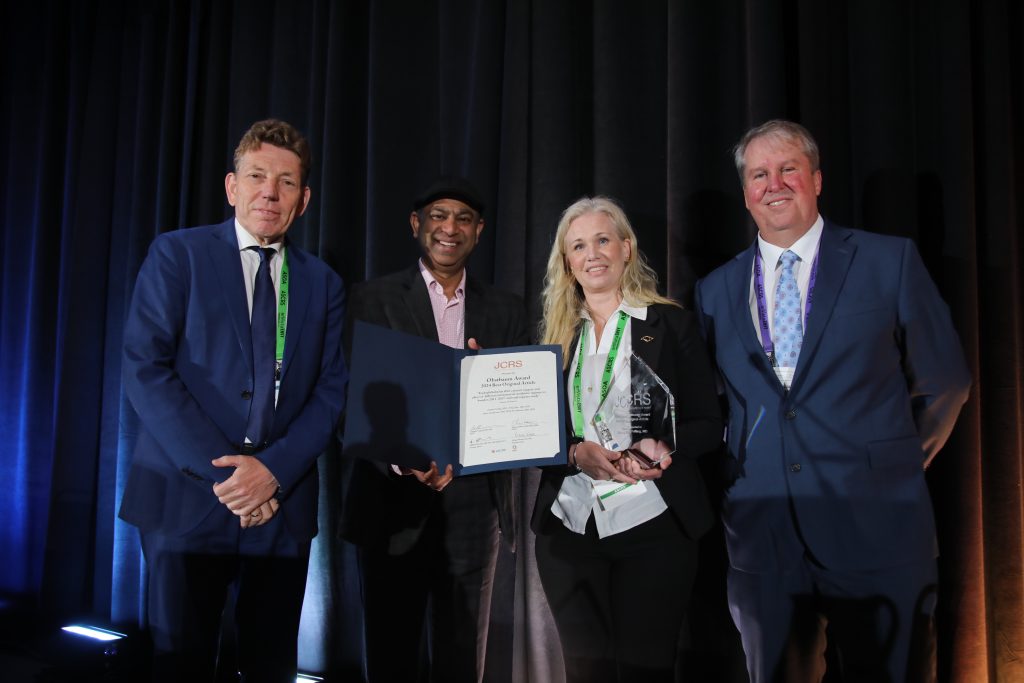
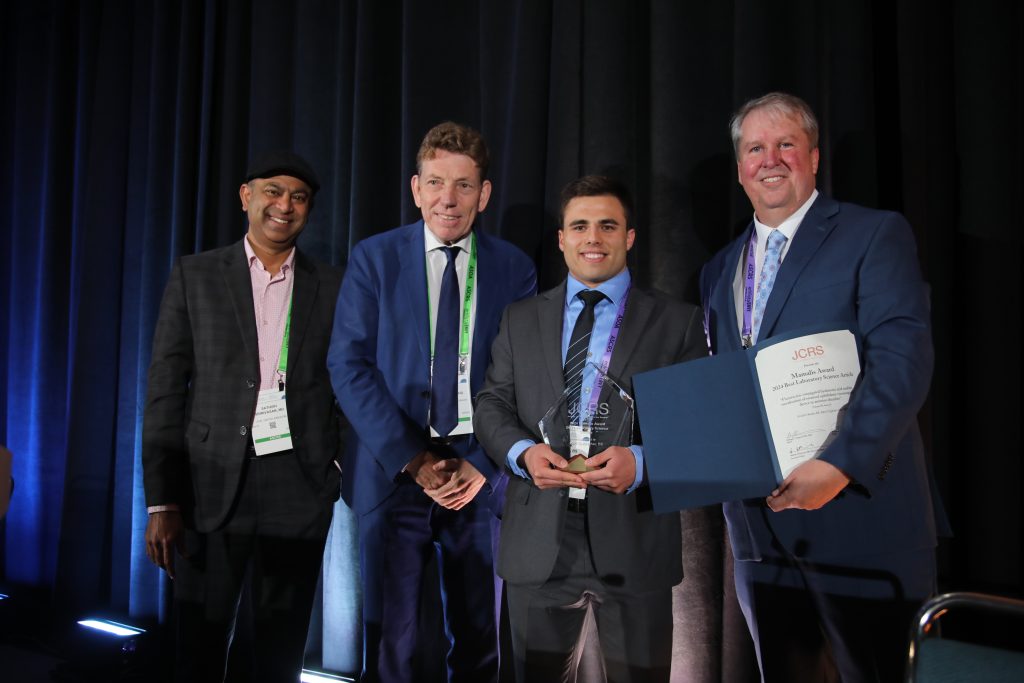
Source: ASCRS
JCRS Mamalis Award for Laboratory Science Paper
Erick E. Rocher, BS
“Fluorescein-conjugated hyaluronic acid enables visualization of retained ophthalmic viscosurgical device in anterior chamber”
The first section of the symposium covered AI in cataract and refractive surgery. Nambi Nallasamy, MD, presented on “Computational medicine in cataract surgery: IOL selection and surgical learning.”
The three main things he covered were: why it’s valuable to use machine learning (ML) to directly predict postoperative anterior chamber depth (ACD), IOL power selection using ML and the tradeoff of generalizability versus customization, and why we need additional evaluation metrics for ML-based IOL formulas.
Postoperative anterior chamber depth indicates true IOL position, Dr. Nallasamy said. The ELP was originally designed as an estimate of the postoperative lens position. However, he said that ELP estimates of existing formulas are not accurate. ML-powered postop ACD predication improves both vergence-based and ray tracing-based IOL calculations.
Dr. Nallasamy mentioned a dataset of 1,200 eyes of 847 cataract patients he used to look at postop ACD estimation with ML. He found that ACD prediction improves accuracy of vergence formulas and said there were significant improvements in the performance of existing vergence formulas by replacing the standard ELP with ELP derived from ML-predicted postop ACD. He added that you can also improve ray tracing IOL calculations with this.
Moving on, he discussed IOL power selection using machine learning, and he mentioned the Nallasamy formula, with the goal of predicting postop refraction using preoperative biometry.
Dr. Nallasamy wrapped up his lecture by mentioning the need for robust evaluation metrics for AI-based IOL formulas. The issue with AI-based IOL formulas is that real-world cataract surgery data is imbalanced. For example, a machine might think that you should be predicting/targeting 0 in a good formula, but this is not always the case.
Relevant disclosures
Nallasamy: None