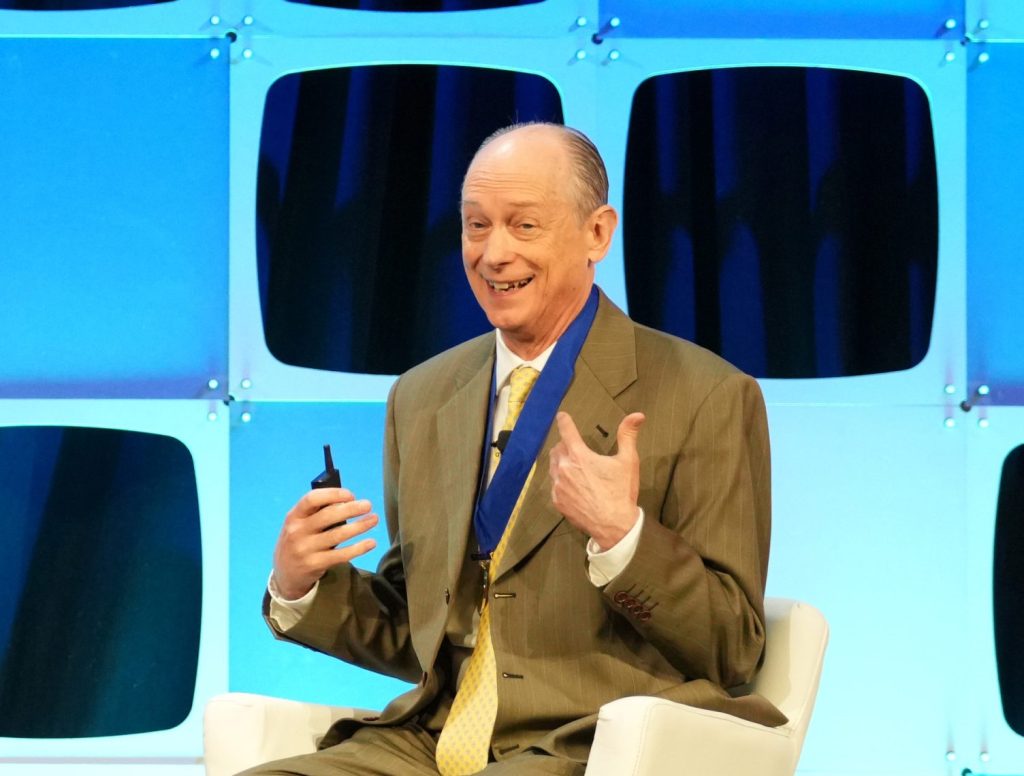
Anton Gunn energized ASOA attendees at their Opening General Session on Saturday with lessons in how to be an effective leader during times of uncertainty.
“A leader’s greatest responsibility is to change the energy in a room when the room’s energy is not right,” said the former head of the Office of External Affairs at the U.S. Department of Health and Human Services (HHS) under Secretary Kathleen Sebelius, former senior advisor to President Barack Obama, and a C-level healthcare executive. “A leader should be a thermostat, not a thermometer. Don’t reflect the temperature in a room, set the temperature in a room.”
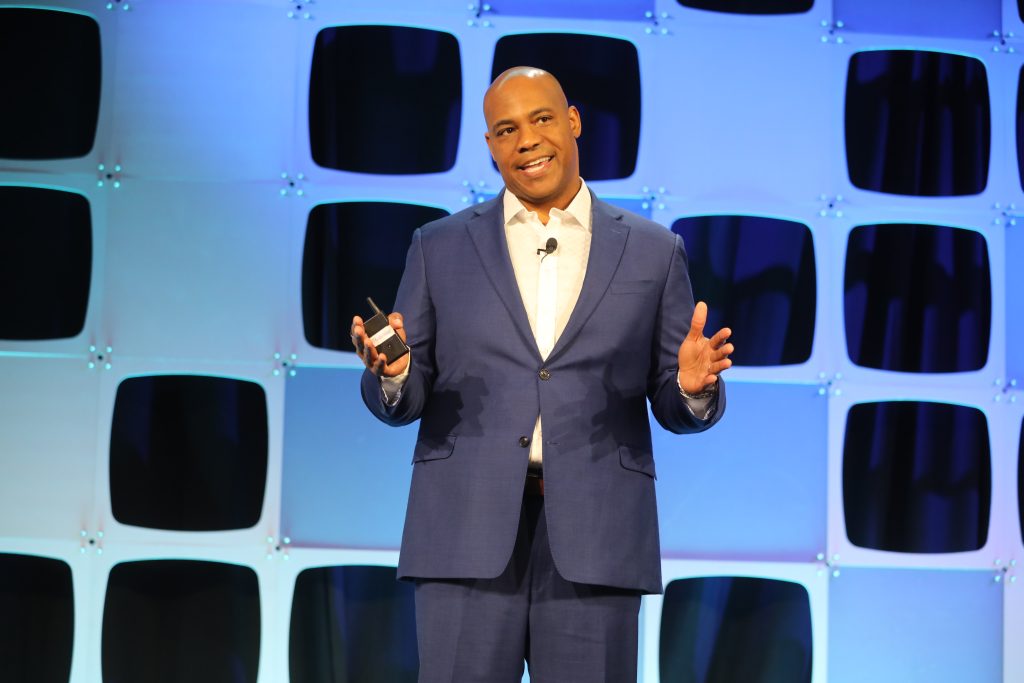
Source: ASCRS
Mr. Gunn, who was the first African American elected to South Carolina Legislature from his district and the youngest CEO of a statewide nonprofit advocacy agency, first provided attendees with a little bit of context about himself so they could better understand how his experience shapes the strategic advice he gives today. Mr. Gunn grew up as a 4th generation military brat (his words), which gave him the foundational understanding of the importance of service. His family came from humble beginnings, and as the oldest of four siblings, he knew he was a leader and had responsibilities as such.
Fast forward to April 1, 2014, when he was in the Rose Garden of the White House celebrating the goal of achieving 7 million people signed up for coverage under the Affordable Care Act. This success moment for Mr. Gunn came after substantial doubt and fear when healthcare.gov had experienced a rocky rollout in the months prior. “It had been a dark time and dark days, but on this day, we had achieved the goal, and I stood there in the moment trying to soak up what was going on.” But how did things get so right after being so wrong for so long? he pondered.
This took Mr. Gunn back to a moment 10 years prior when he and his wife were expecting their first child and a simple mistake made when filling out their health insurance forms (he checked maternity coverage for himself but accidentally not for his wife) left them without maternity coverage. “We spent $17,734 for the birth and delivery of a healthy baby girl and it took 3.5 years to pay it off,” he said.
In discussions with his health insurance company, he said all he wanted was someone who, in this unfair situation, could make this right. This is what employees want of their leaders. Someone who can just do something to make it right. When people experience unfairness and don’t have a leader who steps up to do something to make it right, they go on an emotional rollercoaster that’s not good for business. “It only takes one adverse event for someone to start on a cycle where they spiral out and it has a massive impact on your ability to be effective and productive,” Mr. Gunn said, noting that he calls this cycle the Eight Stages of Alienation.
These stages go from stress to fear to distrust to anger to resentment to isolation to separation to resignation. There are people at your organization who may be stage 8, and they’re not quitting physically, but mentally. “These employees are so burned out and broken by the process that they’ve mentally resigned,” he said.
These employees result from a culture of low morale, low engagement, a lack of trust, a lack of safety. When these are factors, leaders should be doing something to make it right. It’s often not until a person physically leaves that leadership realizes poor decision making on their part was having an impact on everyone else, which says to Mr. Gunn there was a lot of mental resignation prior to that. He cited a statistic that 58% of ophthalmic staff leave because they feel undervalued or unrecognized.
If you answer three questions (The Affinity Trinity), you will be the best leader employees have ever worked for.
- Do you care about me?
- Will you help me be successful?
- Can I trust you?
There are five actions of leaders to build resilient teams to create lasting impact in uncertain times.
- Stay informed: Your job is to maintain situational awareness about every aspect of change, Mr. Gunn said. This can be done by creating a 30-day intelligence briefing, building a “big three dashboard” of your risks, and expanding your information perimeter.
- Tell the truth: Transparency breeds trust. To do this, address the hard things first, speak in plain language, not acronyms, and use the 10 Crisis Commandments, which he described as 10 ways to think about what you need to communicate before you need to communicate.
- Elevate your effort: Become the leader they need. Strengthen your mindset and your skillset, invest in professional development (often that of your team members, not yourself), and serve people first, lead them second.
- Empower your people: Develop decision makers and not task takers by giving them what they need to succeed, seeing people beyond the role they’re in, and teaching what you know so others can grow.
- Lean in and lead. Eliminate the excuses and accelerate the action by being the first in and last out, reminding people of the purpose and mission, and inspiring the people around you.
Mr. Gunn recalled being unexpectedly called into the Oval Office on April 1, 2014, and thanked by President Obama for the work he had done to implement the Affordable Care Act. He wondered why the president was thanking him, someone who was four levels down in HHS leadership. Mr. Gunn said the president told him his colleagues had shared how hard he had been working and that they felt he deserved this recognition. The president told him that what they were doing will matter to 50 million people at some point and to people long after they are gone. “That’s when it hit me like a ton of bricks. That’s what leadership is all about and what becoming a legend means. It means legacy.”
Mr. Gunn said legacy doesn’t mean to be successful but to be significant.