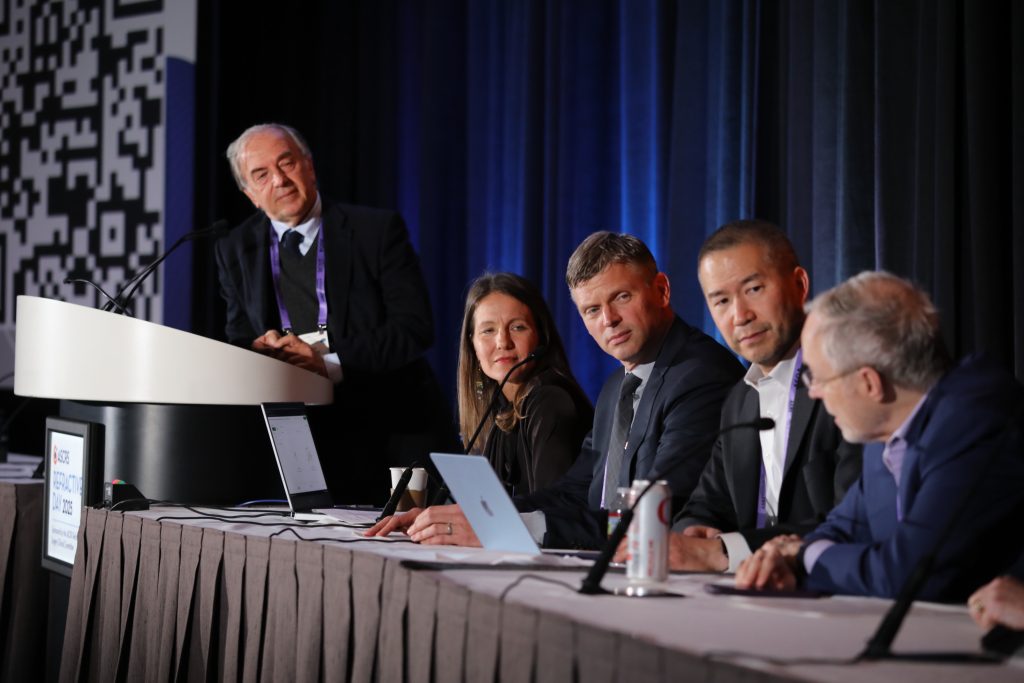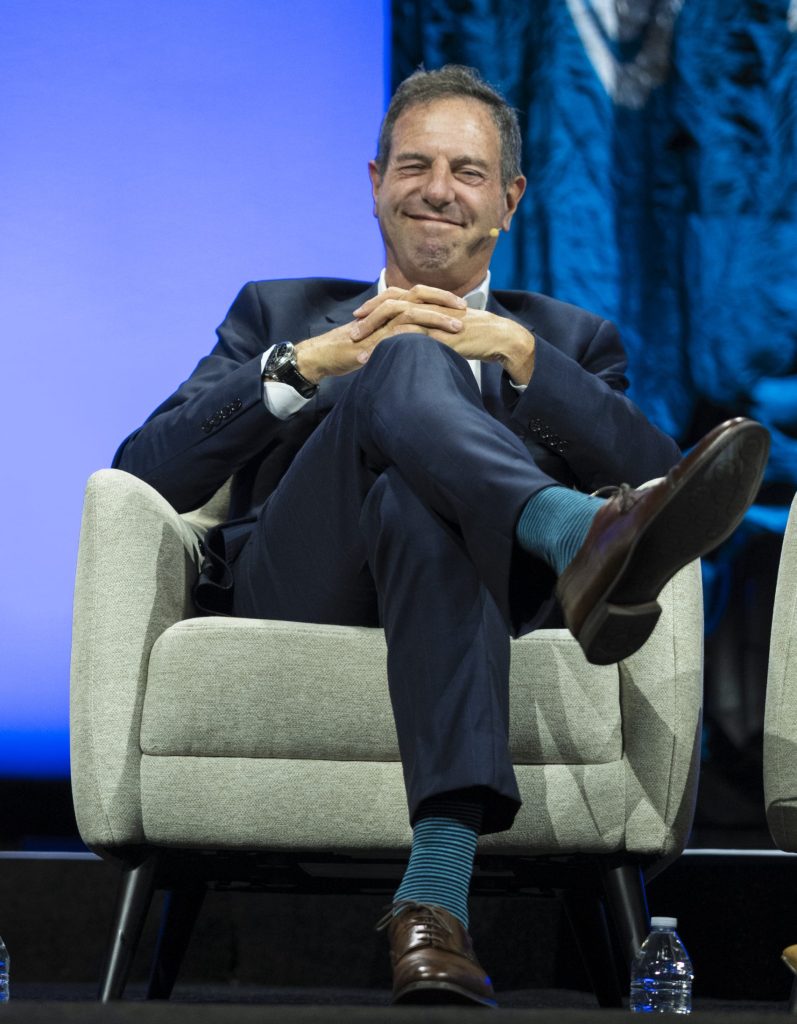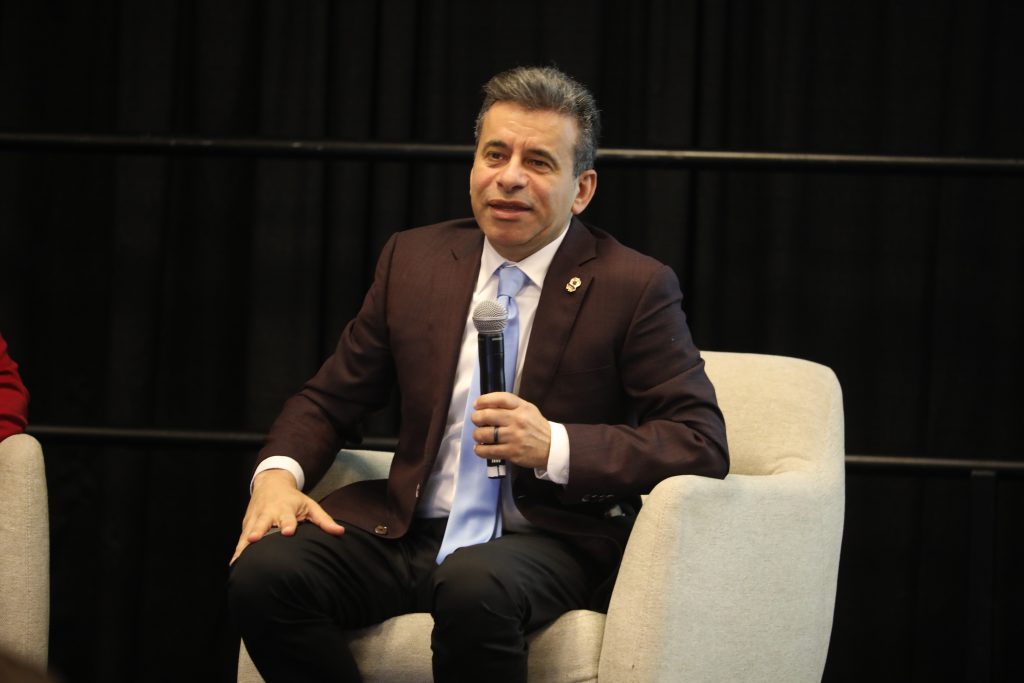
The Foundation symposium took place on Saturday morning, this year titled “Volunteerism in Domestic Humanitarian Eyecare: Be the Change You Wish to See.”
The symposium was sponsored by Johnson & Johnson Vision and Carl Zeiss Meditec. The session also featured recognition of this year’s Operation Sight Volunteer of the Year, Judith Kirby, MD.
The session was moderated by Zaina Al-Mohtaseb, MD, Susan MacDonald, MD, and Cathleen McCabe, MD. It also featured Vance Thompson, MD, Omar Shakir, MD, Rajesh Rajpal, MD, Nikki Fedoravicius, MPH, Lori McCoy, COA, Hayley Boling, MBA, COE, Jeffrey Levenson, MD, Lisa Park, MD, and Sarah Duval, COE.
Dr. Al-Mohtaseb mentioned the possibility of a patient not having someone with them on the day of surgery. That’s more common than you might think, she said.
Panelists then discussed some of the barriers like this that they encounter when helping patients in need and how they’ve addressed them.
When people call my office, Dr. Levenson said, the first thing his office staff used to say was, “What’s your insurance?” Not everyone has insurance. Sometimes, we don’t even realize we’re limiting access, he said.
Dr. Park said she asks patients two questions when they come in: “‘Are you working or are you retired?’ and ‘Who’s coming with you on the surgery day?’ I’m surprised at the number of people who don’t have someone,” she said. “These are things we need to think about. There are many steps to getting cataract surgery that are outside just having the surgery.”
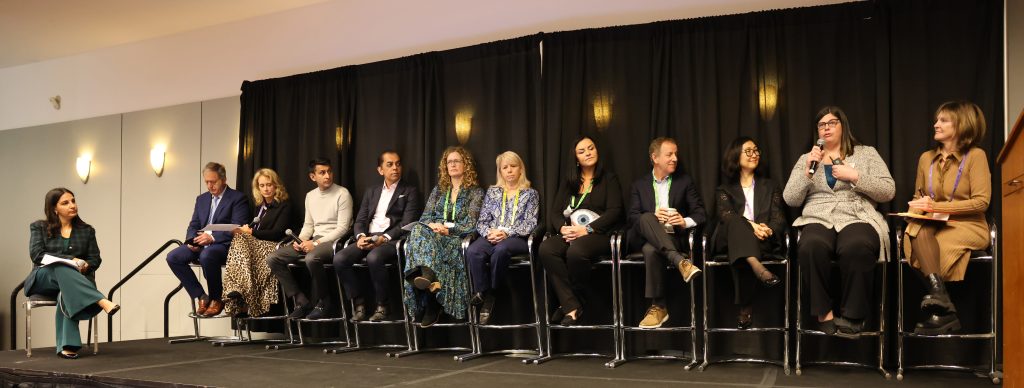
Source: ASCRS
Ms. Boling said that one thing providers, practices, and organizations can do is try to identify areas of friction that exist in their processes. We often look through it with an insurance lens, she said, adding that it’s important to look at your processes from the view of someone who doesn’t have access. When you are intentional, you can find these areas of friction and try to overcome barriers for those already nervous, scared, alone, and needing care. Ms. Boling noted that in her practice, 25% of the team members in the clinic speak other languages. We also make sure we don’t require social security numbers for those in our care, she said.
One barrier Dr. McCabe noted is the difficulty some patients have with transportation. We partner with local transportation providers, she said.
Dr. McCabe added that patients are often concerned about going home and not having anyone to help them in the postop period. While there isn’t always a drop-free solution, she tries to make surgical plans that make the timeframe easier for the patient.
Every one of us has a power that we don’t recognize, Dr. Levenson said. When you’re doing hundreds to thousands of cases in a surgery center, you have influence with that surgery center and companies. It’s easy to ask for some free procedures when you’re performing so many, and that’s exactly what Dr. Levenson did. “Use your power and influence for the betterment of patients in your community,” he said, adding that “companies and institutions are grateful for your efforts,” as are staff.
Those on the panel also shared some impactful experiences they’ve had with patients.
Dr. Levenson helped a patient, through Operation Sight, who lived several hours away from him. When he sent the patient home, he gave out his cell phone number in case of any concerns. The patient texted him around midnight the night of the surgery, and Dr. Levenson thought something was wrong. However, the patient wanted to tell him that he could look up and see the stars, which the patient hadn’t been able to do for so long. Dr. Levenson then went outside to look at the stars himself. “They looked more beautiful to me than I imagine they had to him, and that’s the kind of impact Operation Sight can have,” he said.
Dr. McCabe detailed another similarly meaningful experience where she had a patient’s daughter thank her. Previously, the daughter had been caring for both her mother because of her declining vision as well as her young daughter. After the mother’s eye surgery, she was able to help with the care of the toddler. “I think we forget sometimes that it’s not just the patient [who is impacted]. It’s the people around them, too,” Dr. McCabe said.
Ms. Boling also mentioned the way the ASCRS Foundation can help set physicians up for success in helping these patients. The first step is to make the decision that you want to be part of it, she said, reaching out, saying “yes,” and knowing that you’ll be part of changing the trajectory of someone’s life.