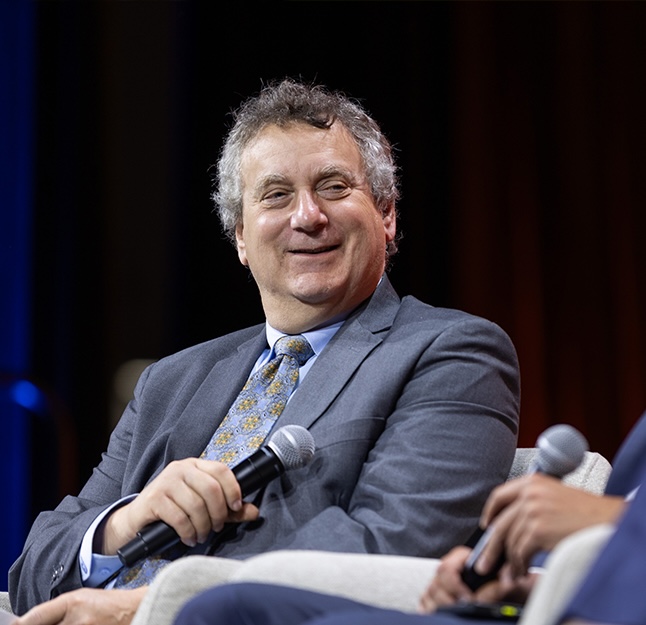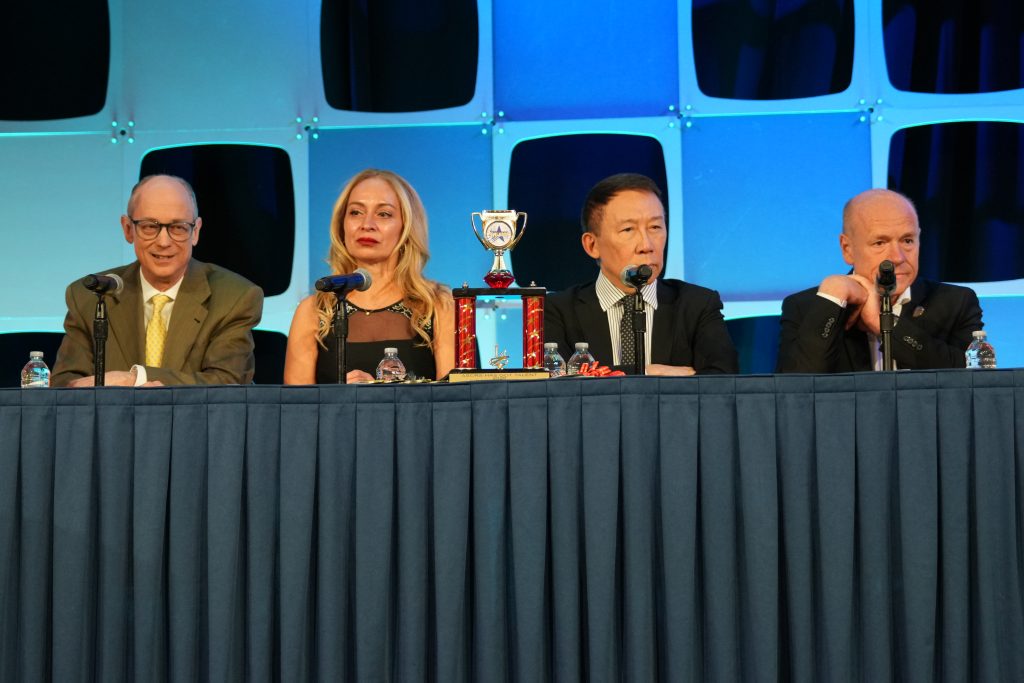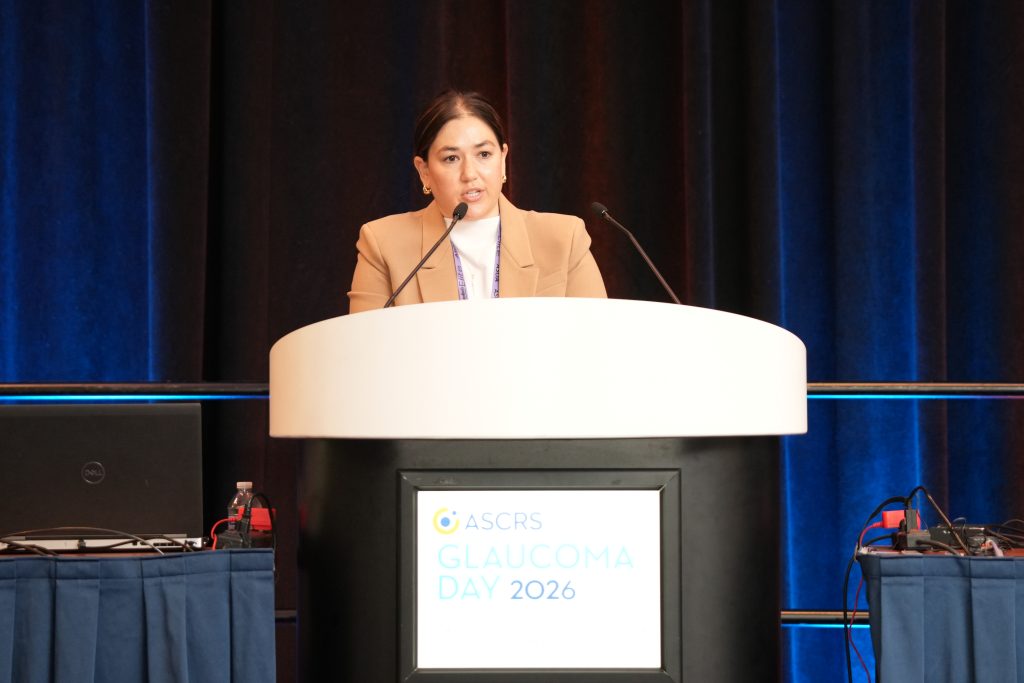
The Stephen A. Obstbaum, MD, Honored Lecture was held on Friday afternoon on the Glaucoma Day program. Steven Sarkisian, MD, gave this year’s lecture, titled “Velocity: My MIGS Manifesto.” Dr. Sarkisian started out by mentioning that he joined the ASCRS Glaucoma Clinical Committee back in 2009.
He shared his “velocity manifesto”:
- Patients put their sight into our hands every day. Put them first. Act BEFORE they go blind. Ask them what they want, don’t assume.
- Be content but never satisfied. We can always be better. Don’t be a victim of your training.
- Always be uncomfortable.
Dr. Sarkisian went on to discuss his career in glaucoma, as well as the evolution of the field. He mentioned Reay Brown, MD, and his contribution to the field, noting that he was ahead of his time, believing that glaucoma is a surgical disease. Attitudes about glaucoma began to change as well, Dr. Sarkisian said, noting when the American Glaucoma Society added a “surgery day” to their meeting.
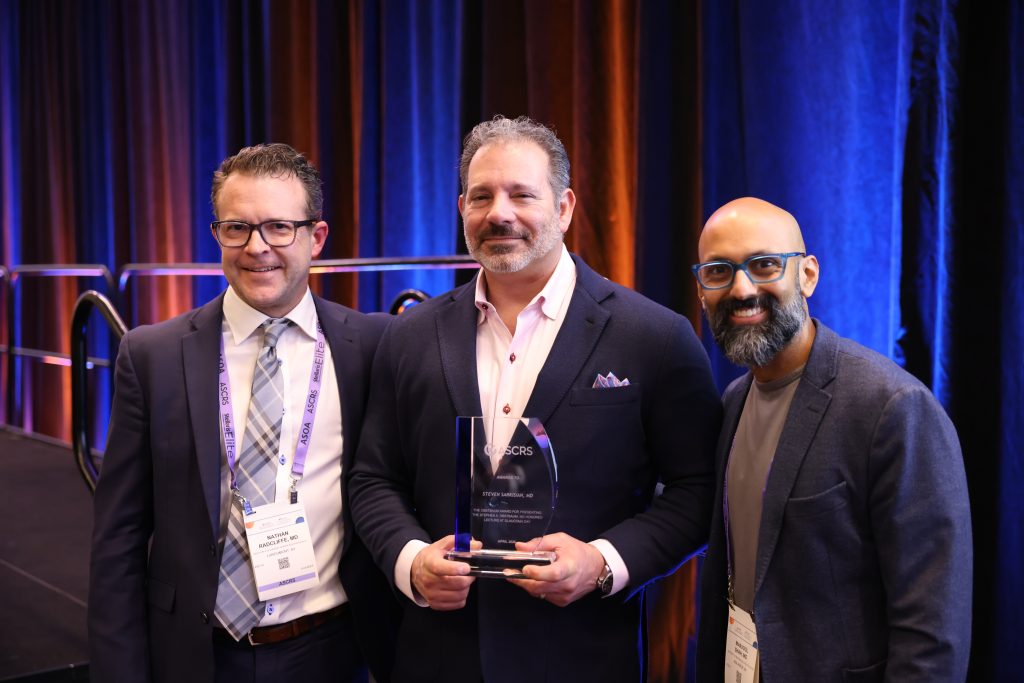
Source: ASCRS
Consensus often lags behind truth, Dr. Sarkisian said.
He said the reign of the trabeculectomy has ended, though people still need filtering surgery.
Dr. Sarkisian also discussed several technologies and products in the space and the process of them becoming available. He discussed the EX-PRESS device (Alcon), which was first marketed to high-volume cataract surgeons as an “easy” filtration surgery. He highlighted the Ologen, which is an implant made of porcine atelocollagen crosslinked with glycosaminoglycan. It induces a regenerative wound healing process without MMC. He also mentioned ab externo canaloplasty and the “fight” to have this accepted.
He called trabecular microbypass the quintessential MIGS. For those of us already doing phaco/ECP, it was great to have another procedure that lowered IOP without a bleb, he said. He also mentioned personalizing MIGS and premium MIGS, but it takes time, and you can’t just have a fixed algorithm. You have to look at the patient in front of you and really think.
Dr. Sarkisian then highlighted the Sight Sciences journey from 2009–2013. This started as a stent company, and in the process of designing their TM stent, they discovered that the stent delivery system could go all around the canal. They devised that they could use it to inject viscoelastic, put the stent development on hold, and moved forward with the catheter. During the development of the catheter, they noticed that in cadaver eyes, the TM could be ripped as they went 360 degrees around the canal. They then put the VISCO360 on hold and developed TRAB360, with Dr. Sarkisian as the advisor developing the device. In July 2013, the first cases were done. In September 2014, the first VISCO360 cases of ab interno canaloplasty in the world were done, and in the 2018, the first OMNI cases were done in the U.S.
There’s no growth without the partnership of industry, Dr. Sarkisian said, calling industry partners his “defense contractors.” Clinical trials bridge the gap, and research and clinical trial are an integral part of his personal journey moving interventional glaucoma forward. Dr. Sarkisian stressed that it’s important to always put his patients before any company’s bottom line.
Dr. Sarkisian said he wants to make a dent in the universe one eye at a time. He concluded his lecture by wrapping up his MIGS manifesto, saying that it’s important to listen to the naysayers but not to let them stop you from doing what you know is right. Don’t be a victim of your training. Question everything you do, and be relentless in trying to do better for your patients. Be interventional, and listen to the patient.
Editors’ note: Dr. Sarkisian has financial interests with Alcon, Bausch + Lomb, BVI, Elios Vision, Glaukos, Iantrek, Johnson & Johnson Vision, Katena, MicroSurgical Technology, New World Medical, Novartis, Sight Sciences, and Zeiss.