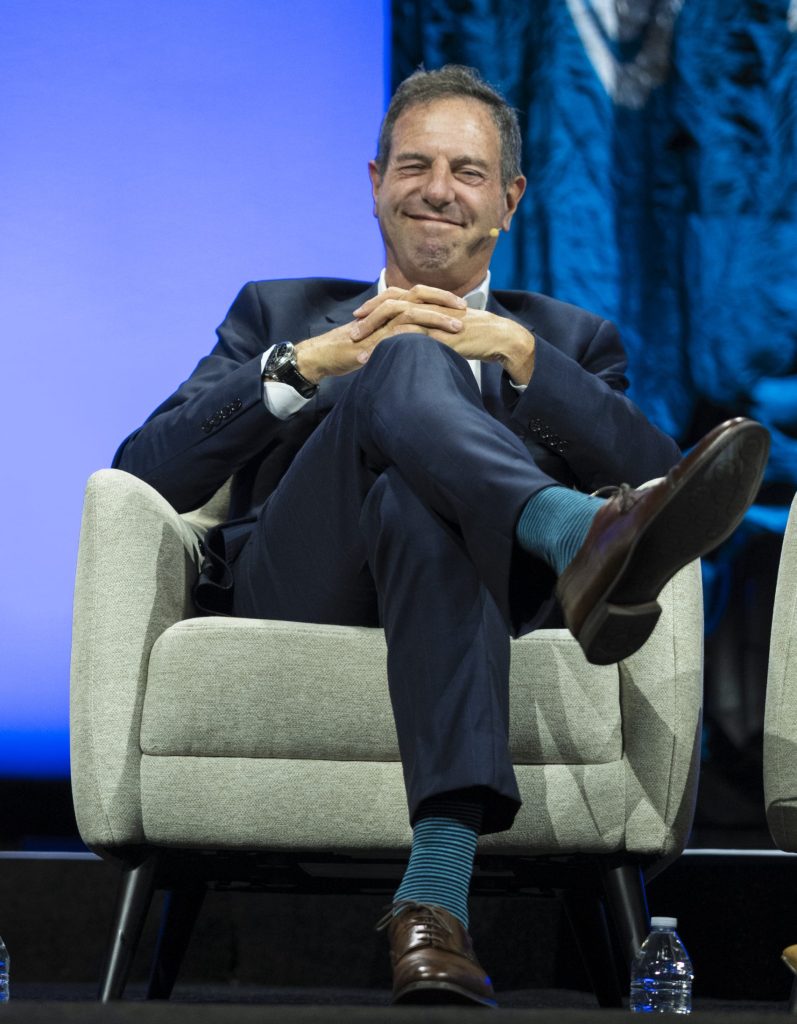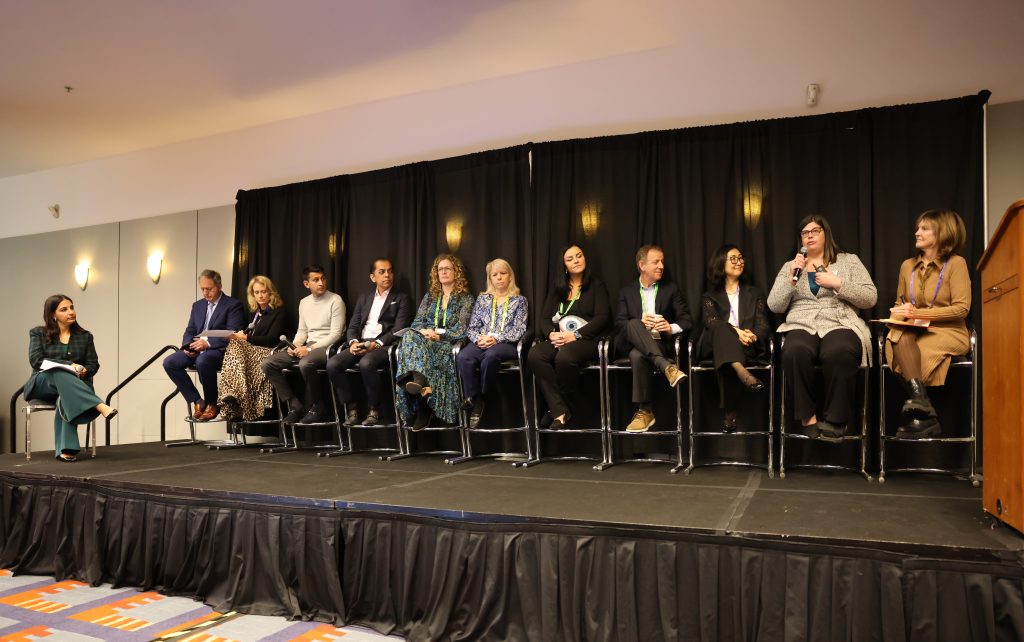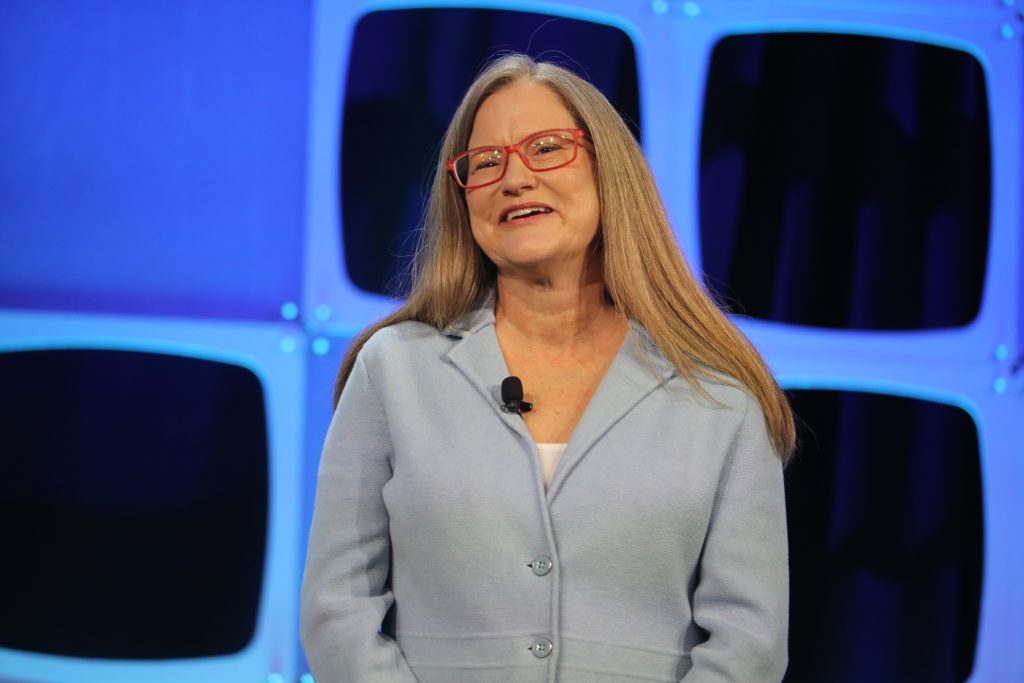
A Friday morning Glaucoma Day session covered topics in medications, lasers, and lifestyle.
During the session, Erin Sieck, MD, shared practical tips for winning with drug delivery. We know from multiple studies that patients don’t use drops as reliably as we think they do, she said, adding that there are several drug delivery options available.
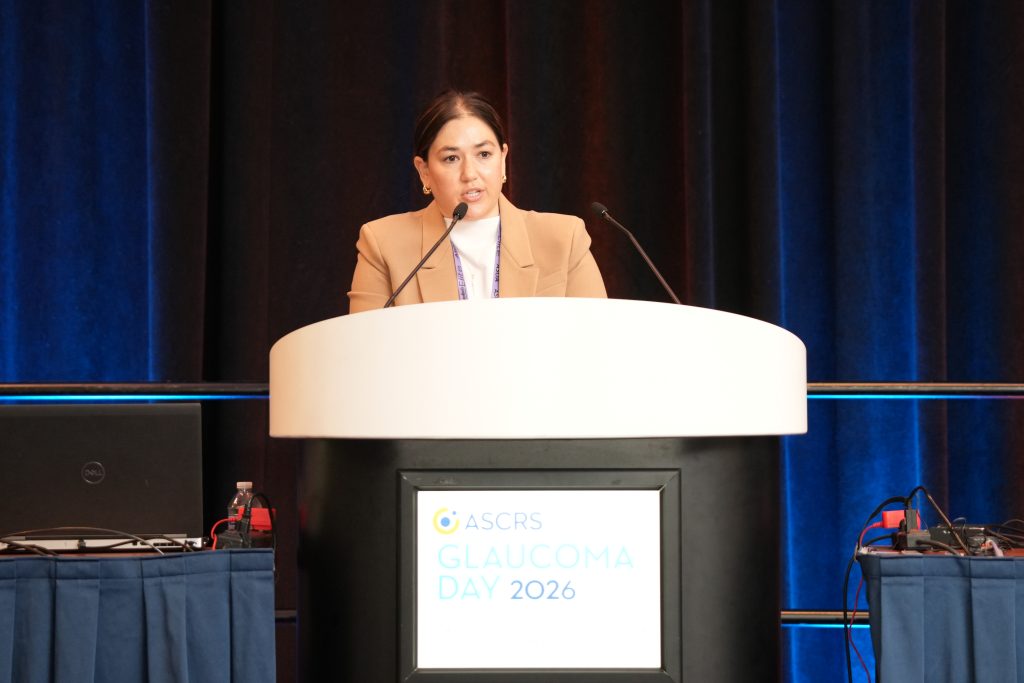
Source: ASCRS
She mentioned Durysta (bimatoprost intracameral implant, AbbVie) and the iDose TR (travoprost intracameral implant, Glaukos). Durysta is injected into the anterior chamber, elutes over 3–4 months, and continues to have an impact for up to a year. iDose TR is travoprost in the anterior chamber from a biocompatible device attached to the sclera. It is most often implanted in the OR combined with cataract surgery.
Dr. Sieck’s first tip was that angle depth is key. “You want the angle to be deep,” she said. You want the patient to be pseudophakic or going to become pseudophakic.
Dr. Sieck also asked physicians in her practice about what they look for when considering drug delivery.
The first was compliance, or lack thereof. Other things to consider included response to topical prostaglandin analogs, severity of glaucoma (you may be able to get mild patients completely drop free, but for more severe patients, you may be able to reduce the burden, but they may not be drop free), poor surgical candidate (people who don’t have a great ability to recover after these surgeries), and positioning of the devices.
Thomas Samuelson, MD, discussed lasers in glaucoma, specifically SLT and DSLT. Though he noted that there is so much focus on the LiGHT trial, he said it’s important. There is 6-year data demonstrating that SLT is safe for treatment of open-angle glaucoma and hypertension, providing better long-term disease control than eye drop therapy.
Dr. Samuelson said laser should be recommended as the initial therapy for open-angle glaucoma. There is great data, and there is also evidence that SLT slows visual field progression.
If SLT is the recommended first treatment, what’s the next step? Is it eye drop therapy or something else? Dr. Samuelson said there are opportunities to bypass topical medications and absolve patients of the requirement to self-dose for therapy. However, he said more evidence is needed to definitively say that drug delivery should be the next step.
Before taking a patient to the OR for incisional surgery, Dr. Samuelson said to consider using a laser procedure, consider eye drop therapy or intracameral therapy.
He also mentioned DSLT, which was cleared by the FDA in December 2023. With SLT, Dr. Samuelson said the laser beam bounces off the gonio mirror, while DSLT is delivered directly to the ocular surface. The GLAUrious Trial examined DSLT, but non-inferiority was not proven. The study was equivocal, and Dr. Samuelson said it was perhaps not adequately powered to provide a difference in the face of a larger standard deviation than anticipated.
SLT should be recommended as first line, he said, and a strong case can be made for depot delivery as second-line therapy.
Nathan Radcliffe, MD, presented on “the surgeon psyche” and counseling and operating in the interventional era.
How we frame glaucoma to patients is part of the problem. “I don’t want to scare patients out of my office only to have them come back 3 years later. Glaucoma is asymptomatic … until it isn’t,” he said. Adherence is awful, but it is not a comfortable discussion between the doctor and patient. He added that patients often fear eye surgery more than blindness.
Dr. Radcliffe also went over “what doesn’t work.” He said you can’t present drops and laser as equal options without additional information—they’ll choose drops. You also shouldn’t frame glaucoma as benign. You need to frame glaucoma appropriately, but not too severely, he said. Additionally, you don’t want to necessarily frame drops as low risk because there can be issues with cataracts, visual field progression, and incisional surgery risk. You also shouldn’t expect patients to entirely understand glaucoma; they are looking for your guidance, recommendations, or instructions.
He likes to have a strategy of multiple touch points and said he loves the strategy of “pre-suasion,” where you start shaping the “yes” before the ask.
Direct: Direct attention first ➔ what people focus on becomes their decision lens.
Ask: Ask early before friction exists ➔ fewer objections, lower perceived cost.
Prime: Prime identity and values ➔ align the request with “who they are.”
Leverage: Leverage consistency ➔ early agreement increases follow-through later.
Dr. Radcliffe said that listening to the patient’s symptoms is important. It’s also key to reframe glaucoma and drops with appropriate risks and to make a clear recommendation. He also stressed the importance of enlisting your team in the process.
Editors’ note: Dr. Samuelson has relevant financial interests with AbbVie, Alcon, Balance Ophthalmics, Elios, Glaukos, New World Medical, PolyActiva, Ripple Pharmaceutical, Sight Sciences, and ViaLase. Dr. Sieck has no relevant financial interests. Dr. Radcliffe has relevant financial interests with Alcon, Alimera Sciences, AbbVie, Bausch + Lomb, Ellex, Glaukos, Iantrek, Iridex, New World Medical, Rayner, Reichert, Sight Sciences, SpyGlass Pharma, ViaLase, and Zeiss.