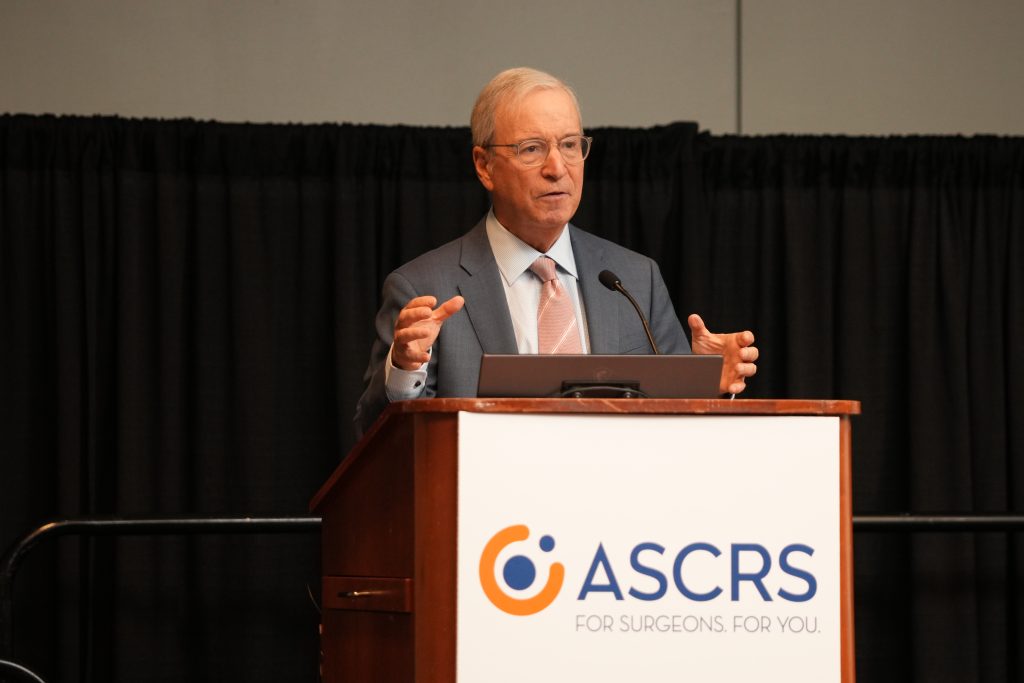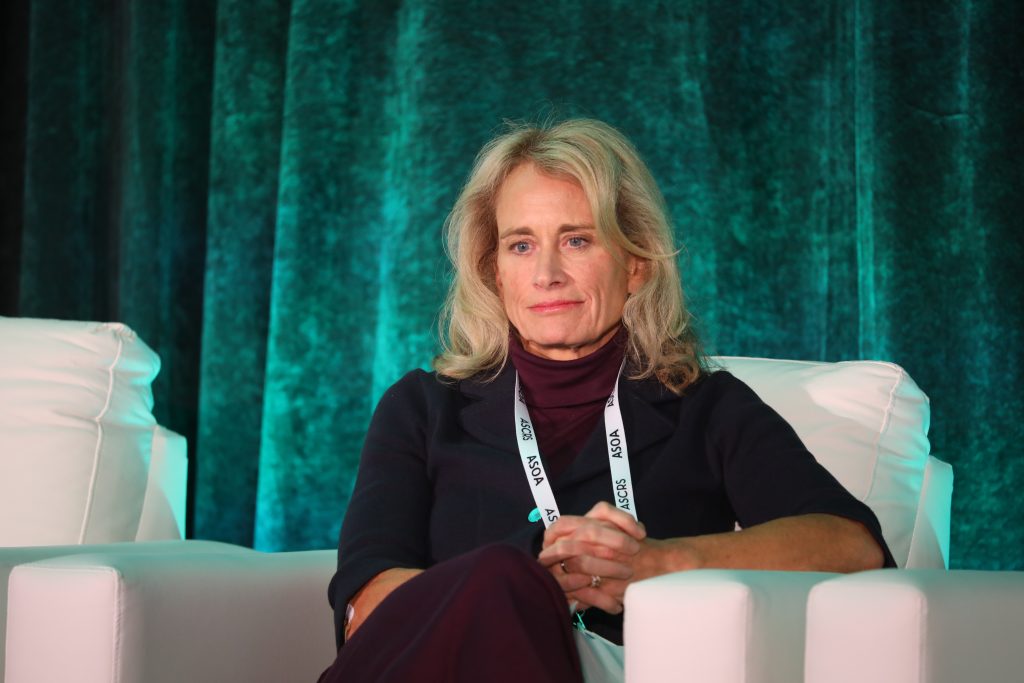
“The Patient Will See You Now: Who Controls the Future of Communication – Patients, Physicians, Regulators or Industry?” was the final panel at SightLine at ASCRS.
Nancy Beesley, Executive Strategic Advisor, moderated a panel including Kerry Solomon, MD, Rob Heller with Heller Agency, Andrew Stewart with Bausch + Lomb, and Imane Tarib, MD.
Ms. Beesley noted that things have changed, and patients are now arriving at the doctor’s office not as a “blank slate.” They might have a belief already formed about a technology or procedure, and they could have formed this belief from physician or practice content but also from social media or the internet. The rules of the game have changed; not everybody in the ecosystem is playing by the same rules, she said.
So, who controls the patient perception and why?
Discussing the influence of AI, Dr. Solomon noted data that 40 million people a day query ChatGPT alone for health-related queries. It’s significant, he said. Dr. Solomon said he has tested AI with various patient scenarios, and some content it gives you is really good and some is not.
“I think that patient perspective is controlled by so many resources,” Dr. Tarib said, adding that she finds social media to be a big chunk of that. Physicians on social media will be able to shape that perspective, she said.
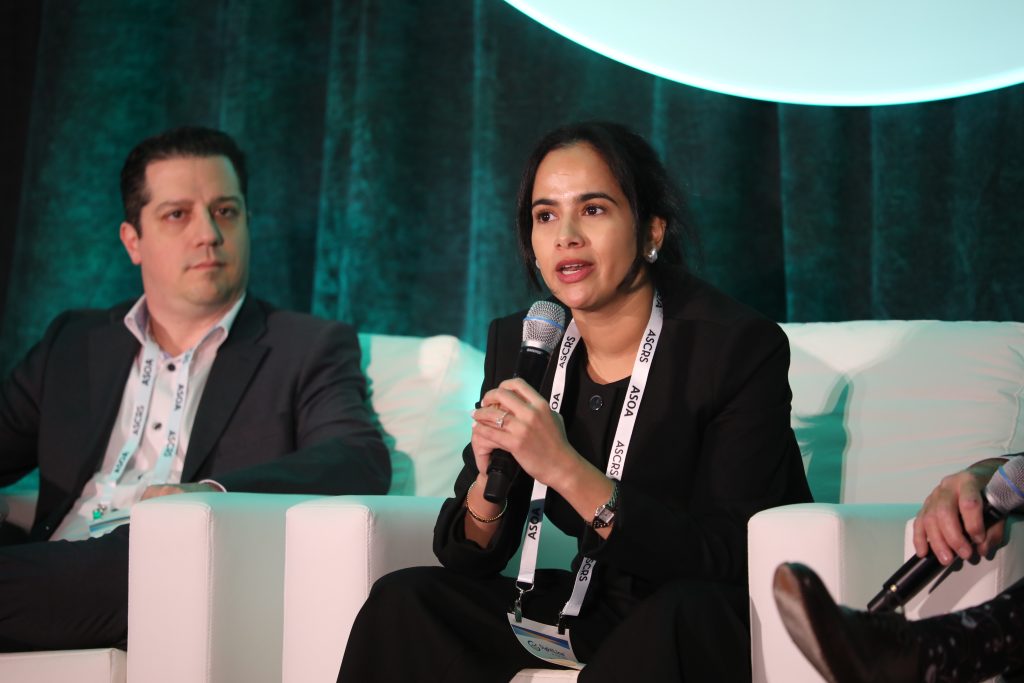
Source: ASCRS
Dr. Solomon finds that before social media, it took longer to educate patients. He actually doesn’t mind if patients come in with misinformation. To him, it shows interest, and he likes to have this dialogue with patients.
When asked if physician influencers should be held to the same standard as industry, panelists had various responses.
Dr. Tarib suggested that having regulations in place could be helpful. However, she noted that if there are regulations, they wouldn’t be the same for physicians and industry. Industry has an agenda to push for a product. While physicians may have an agenda, it wouldn’t be the same as industry.
Dr. Solomon, on the other hand, said he’s not in favor of more regulations. The physician/patient trust is what it’s all about, he said. Patients trust physicians to provide the right education to make decisions, and he doesn’t think this can be regulated.
Dr. Solomon wrapped up his comments in the session by discussing the best way for industry to work with physicians and practices to navigate these changes. He said he would love to see a way for industry to help physicians in general get more positive information and correct information to educate the patient.
From the industry perspective, Mr. Stewart shared one thing he would change to allow something different to be done with patient communications from industry. He cited digitization and upgrading the ability to rapidly utilize information that already exists. There is so much real-world data that exists, he said, and it would be great to use that in claims. It would be ideal to be able to provide a source of truth for information that can be unified in industry and the physician community.
Mr. Heller commented on which group will emerge as the strongest voice for patients in the next several years. He said the goal will be getting into the practice. “People will crave more human-to-human engagement, and I think physicians will get stronger when you’re in the office with the patient,” he said.