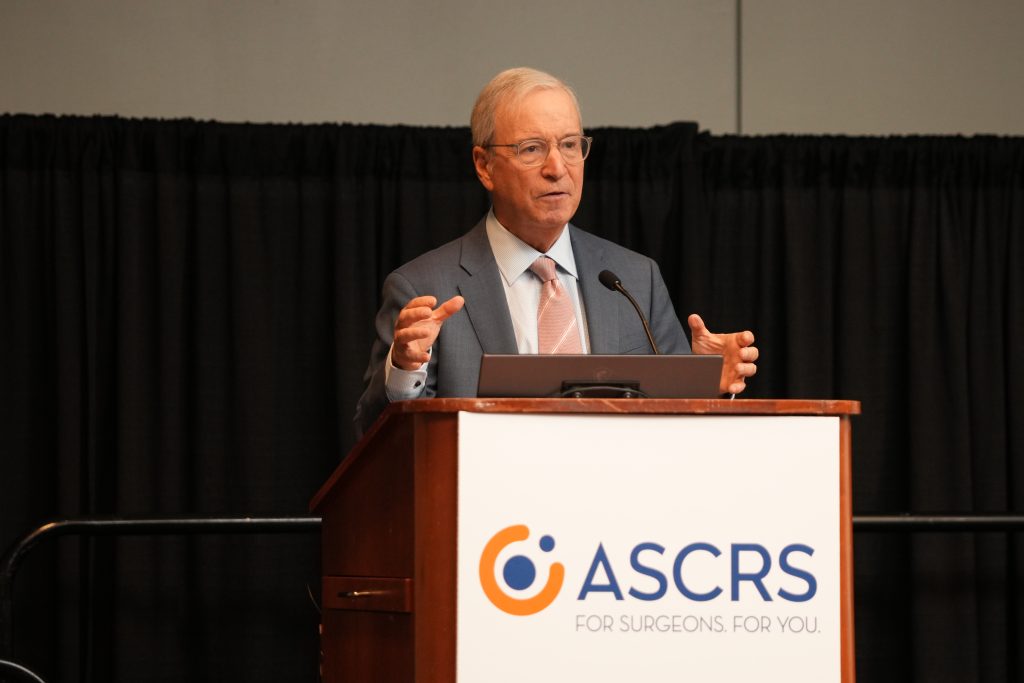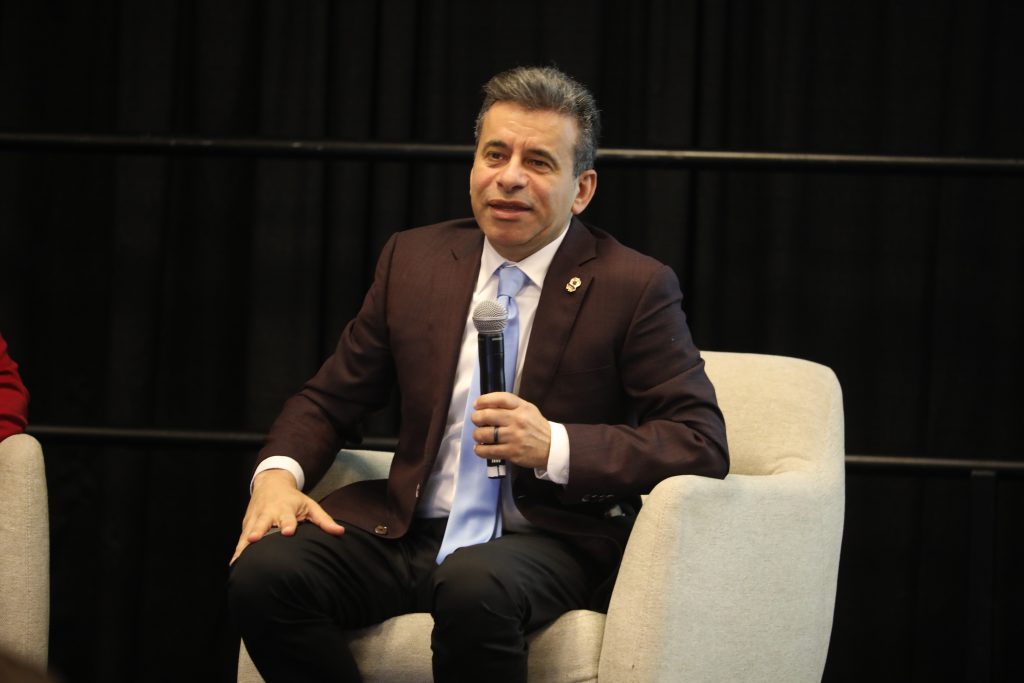
There are no sacred cows at SightLine at ASCRS 2026, said Steve Speares, ASCRS Executive Director. And the future of Medicare under $38 trillion in debt was one of the topics brought to the session room with Mark Cribben, JD, Director of ASCRS Government Relations, moderating and Amy Zhou, Senior Policy Advisor for Congresswoman Kim Schrier, MD (a pediatrician), and Austin Welter, Legislative Director to Congresswoman Mariannette Miller-Meeks, MD (an ophthalmologist), serving as panel experts.

Source: ASCRS
With both panelists involved in health policy and formulation, Mr. Cribben first asked about the top issues regarding the healthcare system and Medicare for their offices.
Ms. Zhou said Congresswoman Schrier is among six other democratic physicians who formed the first-ever democratic doctors caucus, which is working with GOP physician colleagues to push through several priorities, including Medicare reimbursement, prior authorization, oversight for Medicare Advantage plans, and enforcement of the No Surprises Act.
Importantly, Ms. Zhou said there is a lot of bipartisan discussion taking place on these fronts. “Just know there is a lot of really great work, and there is a lot more we agree on than what’s on CNN or any of the news,” she said.
Mr. Welter echoed these sentiments of bipartisanship and the important work being done behind the scenes that doesn’t get talked about.
Mr. Cribben asked whether Congress was evaluating the sustainability of Medicare. “It has to be maintained and sustained,” Mr. Cribben said. But how?
Ms. Zhou said she has been talking to leadership about how within the next 5 years Medicare solvency needs to be addressed. She said Congresswoman Schrier thinks insurance firms need to be held accountable as well. One of the biggest priorities, when Medicare reform does occur, Ms. Zhou added, is that the money goes back to the providers, those seeing patients every day.
Mr. Welter said Medicare reform is a tough conversation in which the legislative and political realities must be weighed. Politics, he continued, have unfortunately stymied serious discussion about impending Medicare solvency. He also said that Congress works better under pressure, and he thinks these conversations will become more serious and substantive when there is a deadline.
When it comes to the impact of year-over-year cuts, Mr. Cribben asked about the perspective and awareness among the rest of Congress (members who are not physicians). Mr. Welter said there is a huge healthcare awareness gap on the Hill, in part because it’s a complicated topic. This is why advocacy is so important.
Ms. Zhou said her office messages the cuts as impacting patient access and affordability. Most staffers don’t understand the mechanics of the fee schedule, but they do know doctors come to them at the end of the year asking for relief. When it comes to messaging sustainable reimbursement reform, it’s important to focus on access (how it’s taking longer to see the doctor) and affordability (that when independent physician practices are acquired by hospitals, because they’re unable to maintain independence financially, costs increase for patients). “That’s a real affordability argument we can make to members, and that’s really important,” Ms. Zhou said.
The panelists also provided perspectives on topics such as how to provide more permanent solutions to the short-term fixes that have doctors asking for relief each year, timelines for such reforms, and more.