ASCRS Subspecialty Day will take place on Friday, April 10, ahead of the 2026 ASCRS Annual Meeting, and promises exciting content across the fields of cornea, glaucoma, and refractive surgery.
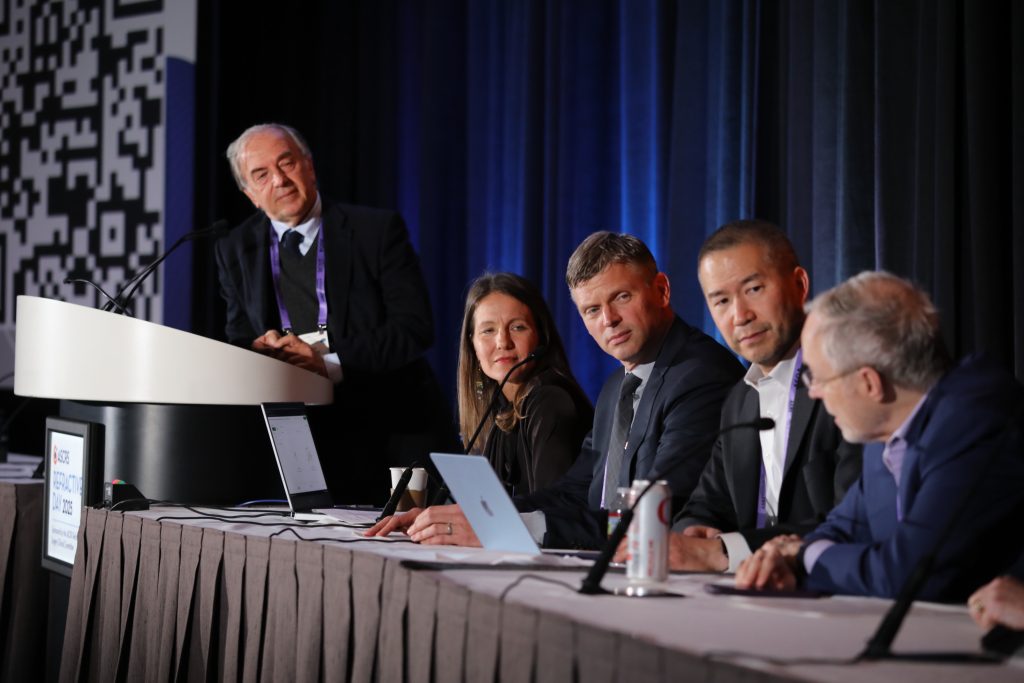
Source: ASCRS
Cornea Day
“Cornea Day is going to be fantastic in 2026,” said Marjan Farid, MD, co-chair of the program. “We have a very diverse program that’s going to address everything in cornea.” The program will start with a deep dive into surgical approaches for various types of keratoplasty, including novel keratoprosthesis that are in the design phase and updates on development. Advanced treatments for endothelial disease, including products like EndoArt (EyeYon Medical)—an artificial endothelial layer and synthetic implant to treat corneal edema—and updates on injectable endothelial cell therapy and where they are in development will be highlighted. “We’re excited to see these technologies come into clinical practice,” she said.
“Additionally, we are going to do a deep dive into keratoconus. We will explore novel diagnostics and treatments, including the latest data on epi-on crosslinking and techniques for best surgical practices to bring refractive options to these patients,” she said.
“The morning session will end by examining treatments for the management of severe ocular surface disease, including persistent corneal epithelial defects and neurotrophic keratitis. We will also review best practices for the management of limbal stem cell deficiency,” Dr. Farid said. “The afternoon program will cover a variety of office-based diseases, including the management of various infectious and non-infectious keratitis, ocular surface tumors, and we will highlight what’s new in dry eye disease, including the updated ASCRS Preoperative OSD Algorithm.”
The second annual Holland Lecture will be featured, with Mark Mannis, MD, giving the lecture this year. His lecture will be titled “Electrotherapy and Ocular Surface Disease: Is it in Our Future?
In addition to focusing on some of the new technologies that will hopefully be available soon, Dr. Farid said a staple of Cornea Day is continuing to review best practices in the management of surgical cornea and office-based corneal disease.
Glaucoma Day
This year’s Glaucoma Day program will again feature a mix of relevant topics in the glaucoma field, covering both clinical and surgical topics.
The ASCRS/AGS Joint Symposium will kick off the day, covering a variety of hot topics, like AI and robotics and potential applications in glaucoma, what’s new in minimally invasive bleb surgery, the future of MIGS, and more.
The “Glaukomtecken” session will highlight the latest and greatest in glaucoma diagnostics. Technologies like OCT, gonioscopy imaging, virtual visual fields, AI, and more will be discussed. Another morning session will explore medications, lasers, and lifestyle and will feature discussion relating to interventional glaucoma (including where medications fit in), drug delivery, and available laser procedures.
Afternoon sessions will include a surgical spotlight, which will feature video presentations on topics like repairing cyclodialysis clefts, suprachoroidal outflow procedures, canal-based MIGS devices, gonioprisms, and more.
This year, the Stephen A. Obstbaum, MD, Honored Lecture will be given by Steven Sarkisian, MD.
The final session of the day will be the popular “Complications and a Reay of Hope” video session, where presenters will share their complications via video case presentations, and audience members will vote for the best video at the end of the session.
“I’m really looking forward to this day. It is a highlight of the year for me and a place where I can not only catch up with friends and colleagues, but also pick up a pearl or clinical insight that I can bring directly back to the operating room the following week,” said Manjool Shah, MD, co-chair of Glaucoma Day. “From cutting-edge technology to figuring out how to be better with what we already have, Glaucoma Day will not disappoint. I look forward to seeing you all there!”
Refractive Day
Daniel Chang, MD, one of the co-chairs of Refractive Day, described how this year’s program would lean into the 250th anniversary of the United States in its sessions. “We are tying it both to the celebration of America’s Semiquincentennial and to the Annual Meeting’s location in our nation’s capital,” he said.
The three main didactic sessions are inspired by the three branches of the federal government. The first, “Executive Orders: Debating the Future of Phakic and Corneal Refractive Surgery,” will highlight technologies like corneal refractive surgery and phakic IOLs in a pro and con format mirroring some historic presidential debates. We will cover impactful technologies and management challenges with LASIK, PRK, KLEx, phakic IOLs, refractive lens exchange, and collagen crosslinking, Dr. Chang said. Topics will focus on patient selection, technical execution, and managing outcomes.
The second session, “Legislating Vision: A Disciplined Approach to Lenticular Refractive Surgery,” will take the next step in understanding presbyopia-correcting IOLs for refractive cataract surgery. The goal is to create an organized approach to selecting patients and to understanding and managing patients postop, Dr. Chang said.
Dr. Chang said he’s particularly excited for the introduction of the “visual QRS triad” (visual quality, visual range, and visual symptoms), a framework that can be a central guide to understanding how vision and contrast can be positively and negatively impacted by presbyopia- correcting IOL technologies. The ASCRS Functional Vision Working Group has been working in collaboration with other international societies to clarify these concepts and to promote the successful use of presbyopia-correcting IOLs.
The third session, “Judicial Innovations: Interpreting Outcomes and Emerging Technologies,” will focus on cutting-edge topics such as artificial intelligence, pharmacologic treatments, new corneal and scleral lasers, refractive indexing, robotic surgery, as well as the latest pseudoaccommodating and accommodating IOLs, Dr. Chang said
A highlight of Refractive Day is the annual Steinert Lecture, which will be given by Steven Dell, MD. Dr. Dell will explore how refractive surgery has grown from fringe procedures to the forefront of patient care. Dr. Chang said that Dr. Dell brings a great perspective on how trends and developments in society influence our perspective and the development of refractive surgery.
The final session, “We The People,” will be a video-based case review, which will involve audience (the people) voting for their favorite videos presented.