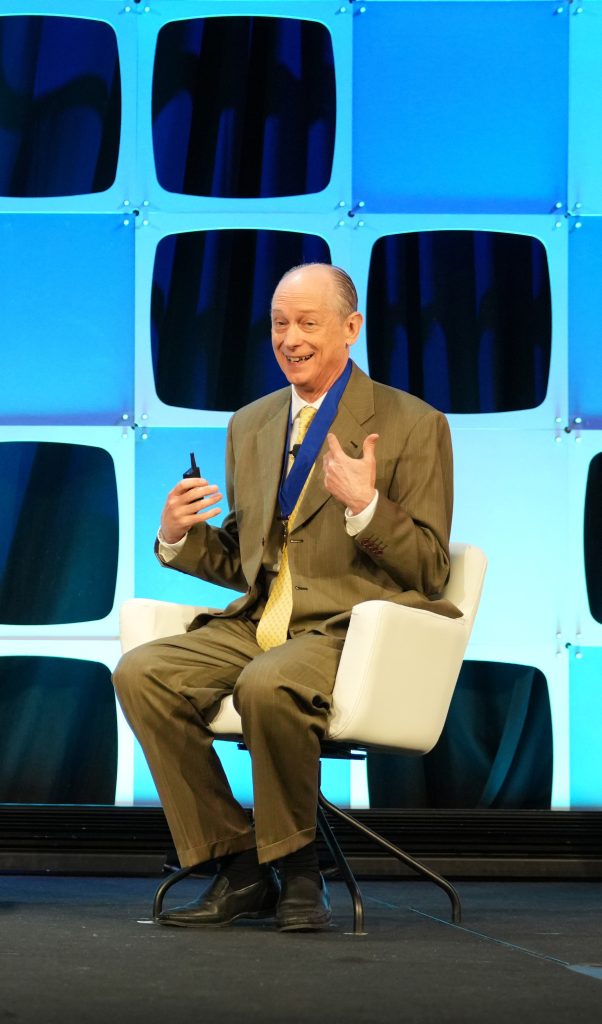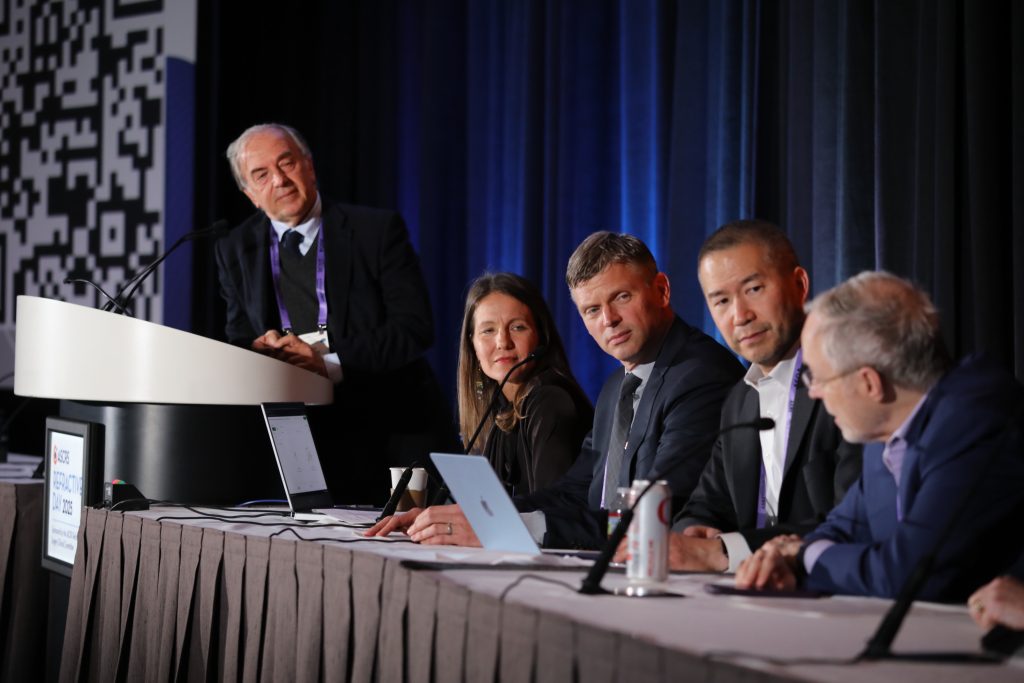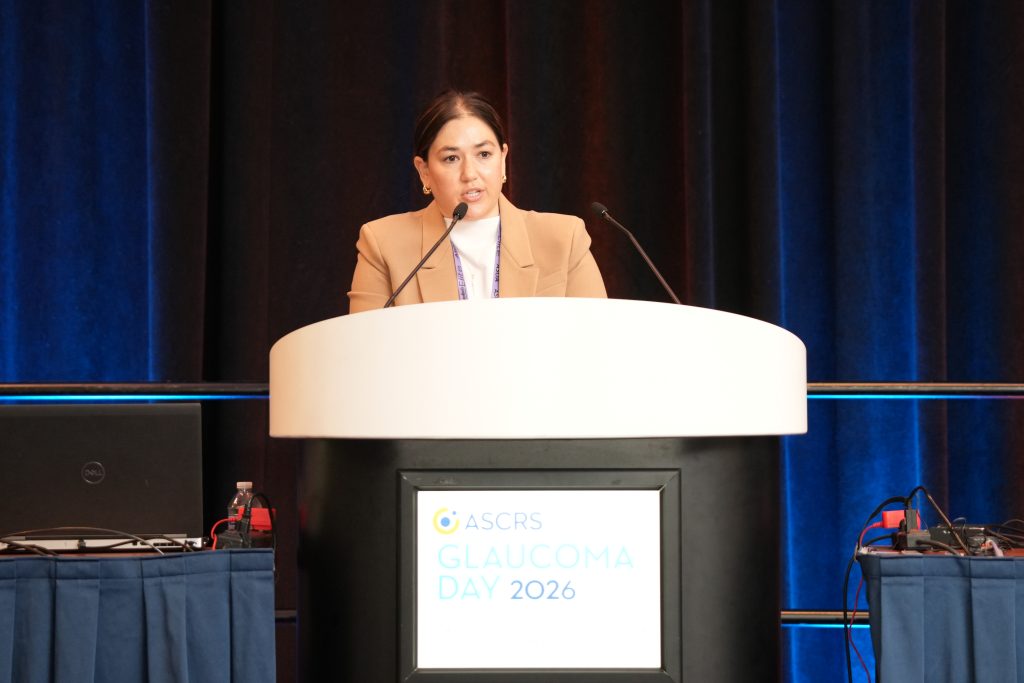
“Get H.I.P.! The Cataract/Cornea/Glaucoma/Refractive Version” Sunday afternoon featured high-impact pearls where the goal was “not only to be entertaining but to give you things you can take back to your practice Monday and use in the clinic,” said moderator Richard Tipperman, MD.
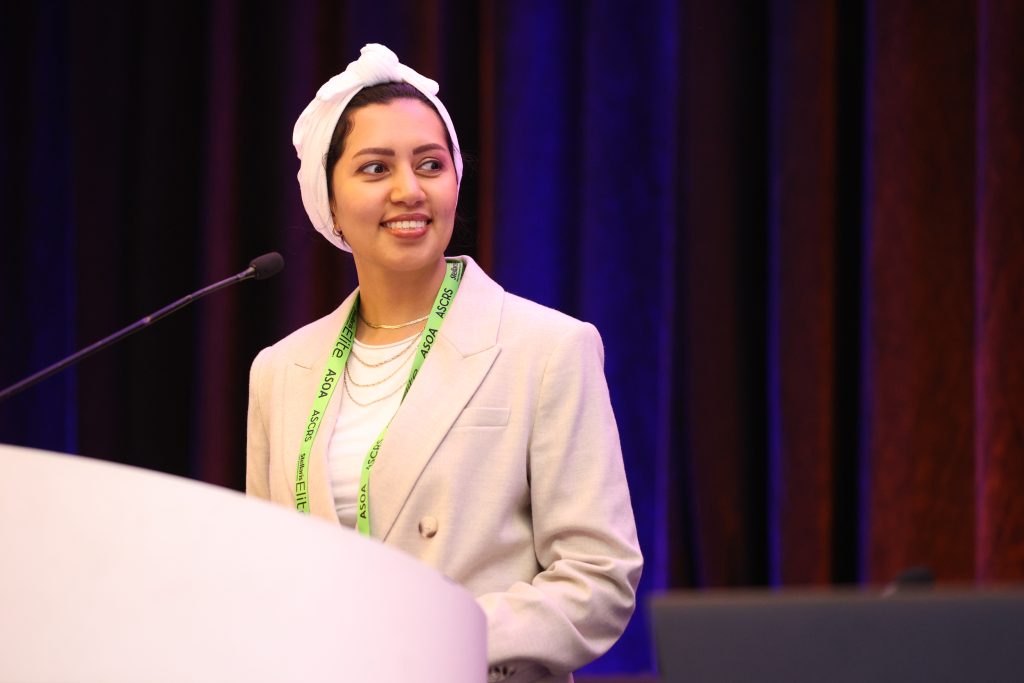
Source: ASCRS
Attendees voted for their favorite pearl in each category. These were the winners:
Cataract
The Zonular Relax – A New Angle to Rhexis Rescue
Presented by Deepak Megur, MD
In this case video the rhexis was running away, but Dr. Megur said the standard rescue maneuver can fight the tension placed by the zonules. “We need to change the physics,” Dr. Megur said. “The secret is scleral indentation.” When he demonstrated this technique, putting a little pressure on the sclera, the flap went slack and the zonules relaxed. He was able to gently unfold the flap and pull centripetally.
“Don’t just pull harder. Relax the system. Indent the sclera. The rescue becomes routine,” he said.
Majan Farid, MD, on the panel said this technique redistributes tension of the zonules, which she thought was brilliant.
Cornea
Using Pupilloplasty Sutures to Optimize the Chamber for DMEK
Presented by Rafah Fairaq, MD
Dr. Fairaq described how pupilloplasty sutures can prepare the iris bed for DMEK when the iris itself is floppy. Dr. Farid commented that flaccid irises in DMEK cases tend to come up and then adhere to the back of the graft later. This technique gets the iris back, which helps you intraoperatively, but there’s also the postop benefit of preserving graft longevity, she said. Brandon Ayres, MD, congratulated Dr. Fairaq on the case overall but expressed concern that the “rabbit ears” of the sutures could catch the DMEK graft and prevent it from unrolling. Dr. Fairaq responded that the graft was smaller and kept away from the sutures.
Glaucoma
Singh Sling Technique to Stabilize the Eye
Presented by Inder P. Singh, MD
Dr. Singh showcased a technique taught to him by his father where two episcleral stay sutures are used when a patient won’t fixate at the light and the surgeon needs to keep their eye still. He said this can be helpful for both phaco and MIGS cases. During discussion, Dr. Singh noted that the sutures are placed 2–3 mm behind the limbus and involve a small bite of the episclera. “The key is not to get to the muscle,” he said.
Refractive
Surf & Turf: Reducing Patient Indecision and Dissatisfaction with PC-IOLs
Presented by David F. Chang, MD
If patients are given too many choices for IOLs, it creates indecision and often has them choosing a standard monofocal IOL, Dr. Chang said. Instead of presenting all the options, Dr. Chang said he is normalizing discussion of mixing and matching an EDOF and trifocal, a surf and turf, if you will. This creates the best of both worlds, he said.
After their first eye surgery, patients can choose to stick with the same lens they just received, but Dr. Chang said three-fourths of patients will opt to mix and match as previously discussed.
Dr. Farid and Kendall Donaldson, MD, on the panel said they used to do a lot of mixing and matching but find more recently with newer lenses that they’re using the same lens in both eyes. Dr. Chang said if patients are presented with the benefit of the mix-and-match technique preoperatively, he has found most choose that and he doesn’t experience dissatisfaction.
The overall best pearl of the session was voted to be Dr. Fairaq’s use of pupilloplasty sutures to optimize the chamber for DMEK.
Editors’ note: Dr. Ayres, Dr. Chang, Dr. Donaldson, Dr. Farid, Dr. Singh, and Dr. Tipperman have financial disclosures with various ophthalmic companies. Dr. Fairaq and Dr. Megur have no relevant financial disclosures.