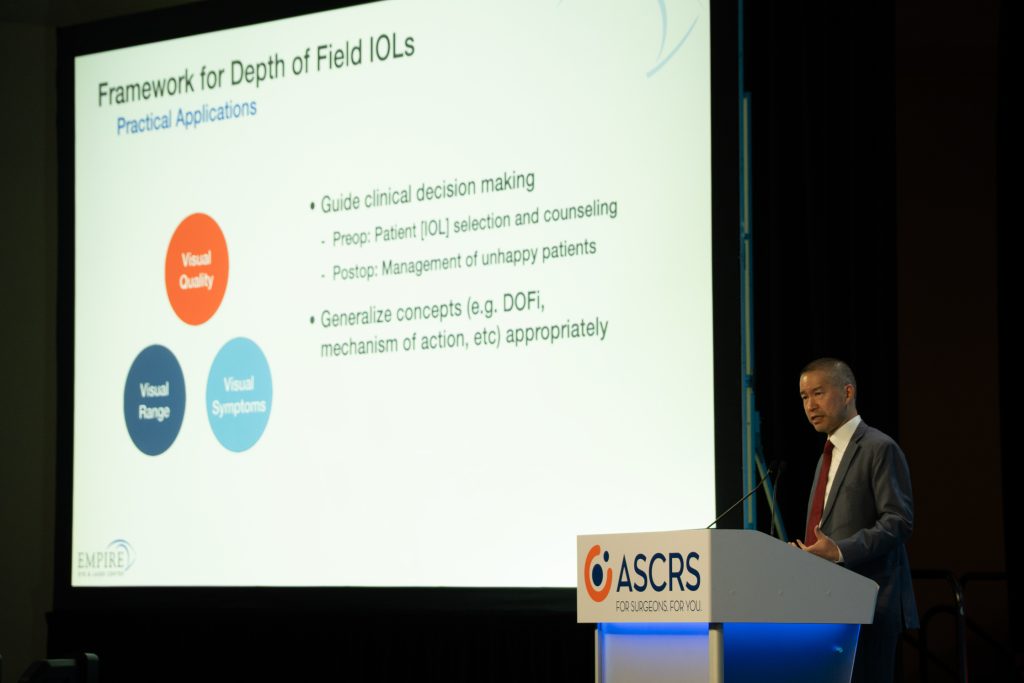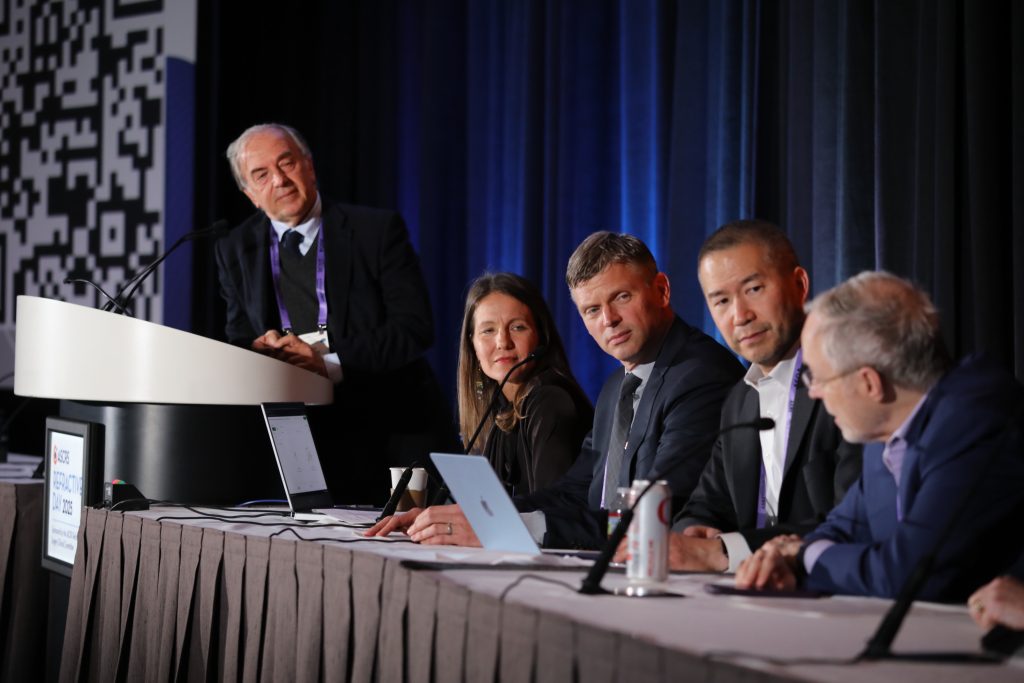
The picture of where we’re headed in terms of practice financial viability can be depressing, said Cathleen McCabe, MD, leading a session at SightLine at ASCRS on Thursday, April 9.
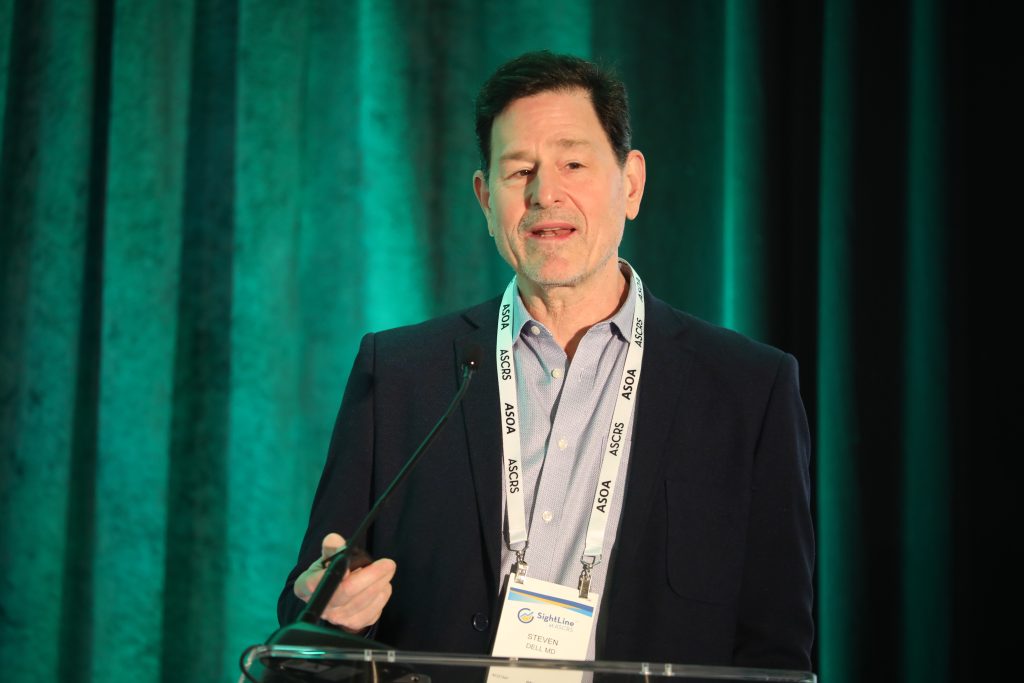
“How do you boil 10,000 frogs? We have a lot of surgeons who are making small cuts and making adaptations to make their practices financially viable. It just doesn’t make sense anymore,” Steven Dell, MD, said about practicing in the age of significant cuts to Medicare reimbursement for cataract surgery.
The internal distribution of Medicare funds has shifted dramatically over the years, Dr. Dell presented. We are now in an 18-year downward trend in professional fee reimbursement, which is in part due to cataract surgery being the highest volume procedure for Medicare’s budget-neutral system and thus an obvious target for cuts. The facility fee, he noted, has gone up while professional fees have taken a dive.
Contrast that with expenses. “Our labor costs have gone up dramatically, our supplies, medical malpractice, facility costs, insurance for employees. We have a 50% reduction in reimbursement with at least a 35% increase in cost,” Dr. Dell said. “Layer on top of that the hidden cost of preauthorization, MIPS reporting, and we’ve all had to adopt rather expensive EHR systems for compliance, which in many cases require full-time IT staff.”
Source: ASCRS
Source: ASCRS
That’s just for regular, uncomplicated cataract surgery. Dr. McCabe, later in the discussion with Dr. Dell, said she sees a diminishing number of surgeons who want to do complex cases because the reimbursement value isn’t there. She envisions a future where patients who require more complex procedures are more vulnerable to not receiving care.
The light in what Dr. McCabe called a depressing outlook for Medicare reimbursement models is that other models have emerged to support practices financially. “Our cataract and refractive lens exchange patients have evolved over the last 20 years,” Dr. Dell said. They’re younger and more interested in spectacle independence, and the technology for enhanced spectacle independence that has the ability to meet patient expectations is now available.
“I’ve seen two viable models evolve that practices have clustered toward: high-volume, high-efficiency practice feeding an owned ASC, or a shift to a patient-shared portion for non-covered services. Some practices have done both things. Unless you gravitate toward one of these polls, I don’t understand viability in the Medicare system going forward,” Dr. Dell said.
Dr. McCabe said that as reimbursement models become more difficult, putting a strain on business finances, practices need to look at other financial models to provide the care that’s best for the patient.
Dr. Dell called his practice a boutique model that has fully adopted a patient-pay system but still accepts Medicare coverage in order to protect that referral stream and provide care to patients who need to use that model. About 80% of his patients are opting for some kind of premium technology, he said.
An important thing Dr. McCabe noted is that you can opt out of Medicare reimbursement for the physician side, making that patient-pay, while still opting in for reimbursement on the facility side. She said she doesn’t think most people know this.
When it comes to premium IOLs, Dr. McCabe thinks practices overall are undercharging for the value provided by this technology. She noted a study that suggested the quality-of-life improvement of these lenses is worth around $35,000, but practices charge a fraction of that. Dr. Dell said Andy Corley has suggested that the price initially set for premium IOLs in the early 2000s should have been much higher. If that were the case, Dr. Dell thinks practices would be able to charge closer to $10,000 per lens today, which is more commensurate with their value.
Dr. Dell said that every time he has raised prices for his premium services, he has not seen a drop in patients opting to upgrade. “Where’s the ceiling?” Dr. McCabe asked. “I’m going to try to find out,” Dr. Dell replied.
“If you think about what does a pickup truck cost? It could be $65,000–$100,000, and that’s something that someone might use for up to 10 years,” he said. “When we frame [premium IOLs] in terms of their value proposition, I think we’re underselling what we provide.”
What else can be done to set cataract surgery up for a hopeful financial future? Dr. Dell said to support ASCRS. “Who else will stick up for us?” He also sees promise for same-day bilateral cataract surgery someday receiving full reimbursement for the second eye.