
This year’s FDA symposium featured FDA Commissioner Marty Makary, MD, who made remarks and answered questions about recent FDA decisions and the direction he wants to see the agency move. The session also featured Michelle Tarver, MD, PhD, Center Director, Center for Devices and Radiological Health (CDRH).
The symposium was moderated by Natalie Afshari, MD, and featured panelist William Boyd, MD, Deputy Director of the Division of Ophthalmology in the Office of New Drugs, Center for Drug Evaluation and Research (CDER).
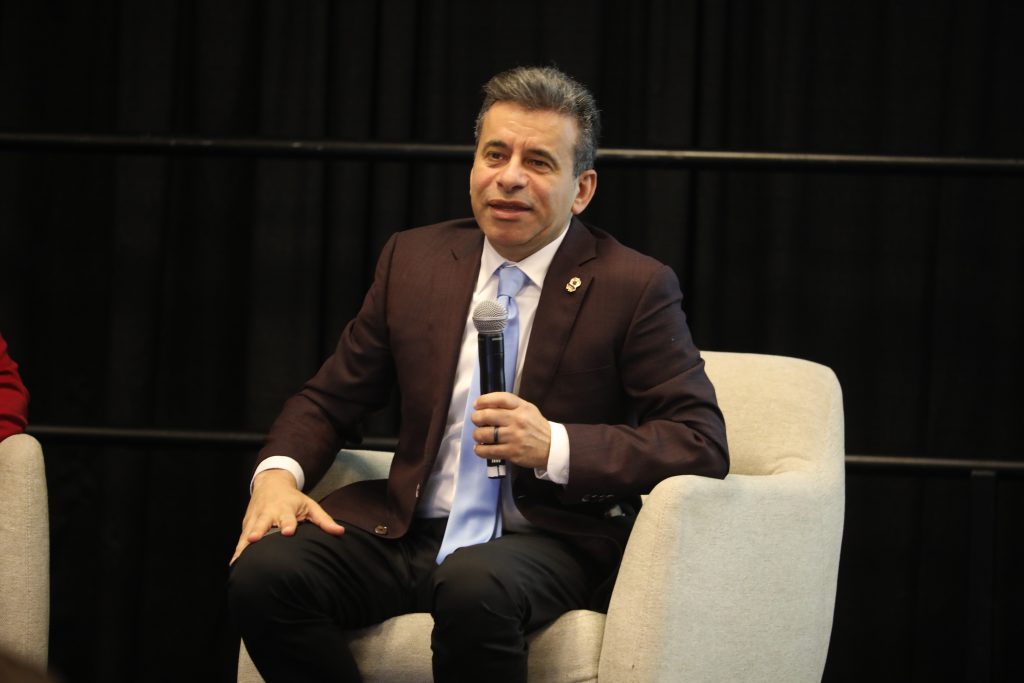
Source: ASCRS
In his opening comments, Dr. Makary discussed how he’s interested in talking about the root causes of the chronic disease epidemic.
One thing that brings people together is using scientific objectivity not contaminated by prejudice or industry influence.
He discussed one recent development in making Complete Response Letters public. These outline exactly why a drug isn’t approved. The public deserves to know why, and developers and individuals and academics deserve to understand how a review works, he said. This also enables the drug developers to understand the process with less guesswork. We had the support internally and the legal clearance to release rejection letters, he said, adding that this decision also helps to address any corporate spin around these letters/rejections. “This creates more accountability, more transparency.”
Another thing Dr. Makary highlighted was if two pivotal trials are needed for every drug to be approved. “I don’t think so,” he said. If you think about basic math, you can achieve the same statistical power with a well-controlled, well-designed single pivotal trial as you can with two. Dr. Makary noted that it’s going to take some time to change this. “We want to,” he said, adding that it will be a change to the culture so that when one pivotal trial can be recommended, that’s what will be put forth as the recommendation. We want to be competitive with the fierce competition we have overseas right now.
In a discussion with Dr. Afshari after his presentation, Dr. Makary was also asked about the most innovative thing in his first year at the FDA and his goals for the next 5 years.
Our goal for this year, is to reform the IND process to get drugs to first-in-human much more efficiently. We also want to see more drugs over the counter. If you have a price on a shelf in a store, there’s something powerful. You see multiple products on the shelf, and it creates a competitive market to keep prices in check.
“One thing I think was a huge success in the last year was our ability to test a hypothesis that we can get drugs approved in a matter of weeks instead of a year,” he said, noting several recent approvals from the FDA, including zongertinib for HER2-mutant non-small cell lung cancer (approved in 44 days). This is part of the National Priority Voucher Pilot Program.
Dr. Makary noted that the fastest approved drug in FDA history was 1996 when HIV activists were demonstrating and demanding approval of Crixivan (indinavir, Merck). The FDA responded with a sense of urgency, and it was approved in 42 days, and we’re now at a similar level for approvals. Dr. Makary said he would like to see the same sense of urgency with HIV to respond to things like cancer, blindness, and ALS.
Dr. Afshari asked Dr. Makary about any structural changes needed from sponsors and regulators to get things through approval faster. He noted that he’d like to see communication with the agency increase.
Anytime you’re dealing with tailoring guidance to a specific product, there will be some variability, but we’re doing a lot to try to standardize things. “We’re doing some internal education,” he said. “It’s going to take time to change the culture.”
Generally, there are two camps. One says you can’t touch anything because it has already been perfected, and another camp is more reckless and wants to destroy and rebuild. We want to hit the right balance of the two.
Asked about real-world evidence, Dr. Makary said it would be great to see more real-world data. We took a step for more real-world data to be included. We are building an enormous database in the cloud that is acquiring access to data that already exists.
Dr. Makary also commented on drawing the line between automation and human judgment, noting that it’s desirable to use AI, but with appropriate safeguards. There’s no simple formula that applies across all devices or drugs. “We’re encouraging everyone to think outside the box.”
This exponential speed of AI development is something we have to be on top of, he said, adding that we should not be reactionary. “We should be thinking ahead, and that’s why we’re writing new guidance documents for what’s on the horizon.”
Dr. Tarver took to the podium following Dr. Makary to give updates from CDRH. The first thing she acknowledged was that there’s so much innovation coming through the doors.
Patients are the heart of the work we do, and we want to make sure they have access to high-quality, safe, and effective medical devices. She shared several things CDRH is focused on. She noted the Early Feasibility Study (EFS) Program, which encourages innovation to come to the U.S. first. She also mentioned the Total Product Life Cycle Advisory Program, where the goal is to expedite patient access to innovative medical devices by providing early, frequent, and strategic communications with the FDA and by facilitating engagement with other key parties for development of breakthrough devices.
Digital health is an area where so much innovation is happening, Dr. Tarver said, noting the Digital Health Center of Excellence. She also mentioned AI lifecycle analysis, as it is important to continue to monitor performance once it’s deployed into the real world.
Home as a Health Care Hub encourages the development of technologies that bring high-quality care into the home and support access to healthcare and new models of care delivery.
One initiative is improving the digital interface patients need to have to use devices properly, Dr. Tarver said, and also to navigate the landscape of interoperability so the devices can talk to each other.
Technology-Enabled Meaningful Patient Outcomes (TEMPO) for Digital Health Devices Pilot is a program that Dr. Tarver noted as a way to exercise some enforcement discretion for low-risk products.
She also mentioned robotics in ophthalmology, including recent interests in the areas of cataract surgery and cornea procedures.
Dr. Tarver highlighted non-clinical testing, including non-clinical performance testing, human factors testing, and cybersecurity testing. How is it going to fit into workflows? It’s not just the surgeon, but everyone else on the team and how they navigate and interact with the device as well.
The FDA encourages early engagement to appropriately assess and mitigate risks, Dr. Tarver said.
Dr. Tarver’s two take-home messages were the importance of looking at the agency as a partner in innovation and that they are committed to finding ways that are safe and effective for devices to reach patients who need them.
Dr. Afshari led a discussion with Dr. Tarver and Dr. Boyd to close out the session. She asked them about the most impactful product or drug approved in the last 5 years.
Dr. Boyd noted several that he thinks have made a big difference: TEPEZZA (teprotumumab-trbw, Amgen), Oxervate (cenegermin-bkbj, Dompe), SYFOVRE (pegcetacoplan injection, Apellis), and Izervay (avacincaptad pegol intravitreal solution, Astellas Pharma), specifically because these products addressed a gap. For those patients who had no effective therapies, it was remarkable to see the data and see how impactful it was for those patients.
Dr. Tarver said the most impactful thing she has seen is the ability for IOLs to more naturally resemble a native lens. That has been a huge journey and opened up better quality of life for many patients. There has also been encouraging work where diagnostics are moving into the home, which opens up opportunities for patients who can’t make it to clinic. Finally, she noted work in the pediatric population.
Looking ahead to the next 5 years and what they hope to see, Dr. Boyd mentioned the National Priority Voucher Pilot Program to try to have certain products move forward in the approval process more quickly than in the past. This will take a lot of effort in the agency. Though he couldn’t mention a specific product, he said there is an ophthalmic product in this program.
Both Dr. Boyd and Dr. Tarver noted future potential with AI. Dr. Boyd said it is a tool that helps with day-to-day processes that reviewers deal with.
AI will be the most transformative technology we’ll see across the lifecycle of all our products, Dr. Tarver said. She also would like to see more telehealth opportunities as well, including across borders. It will also play an important role in the safety of the products, she said. Hopefully, it will improve the quality and decrease safety concerns.