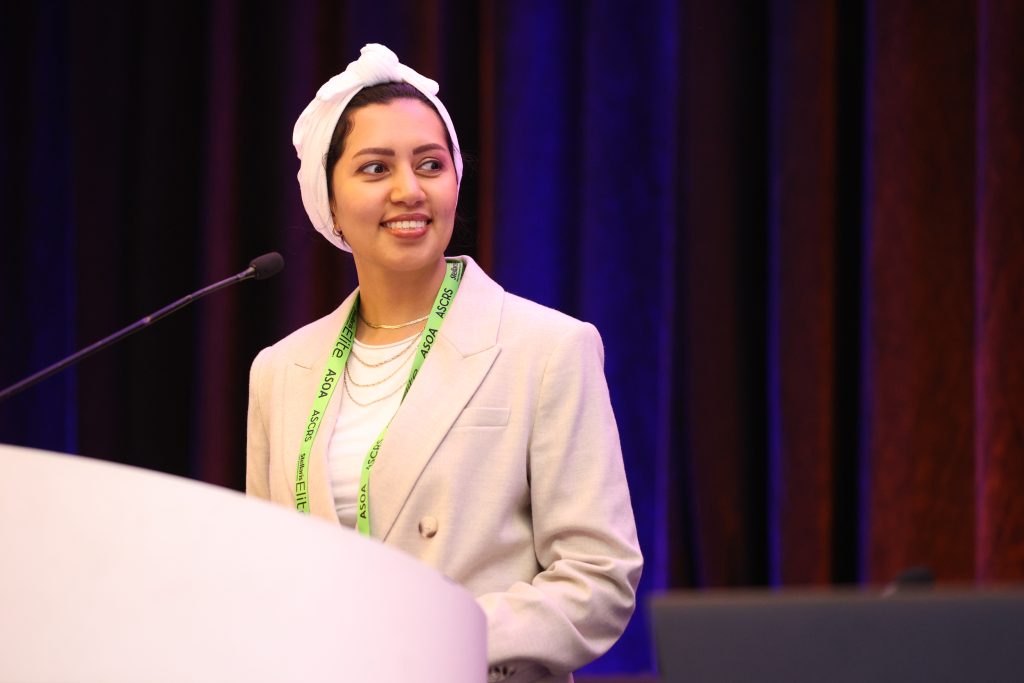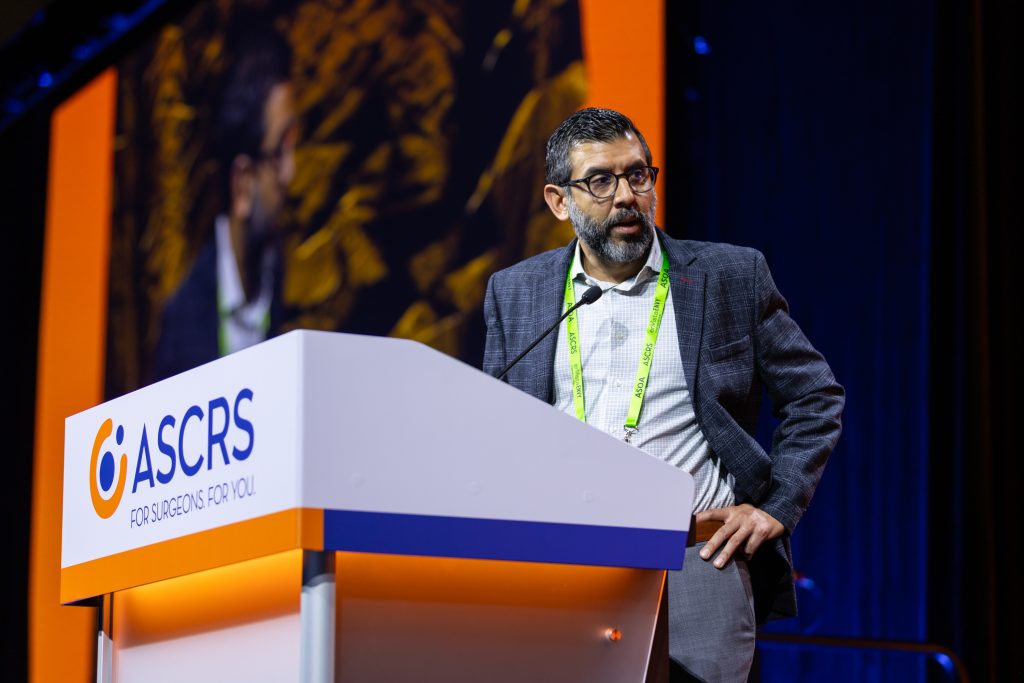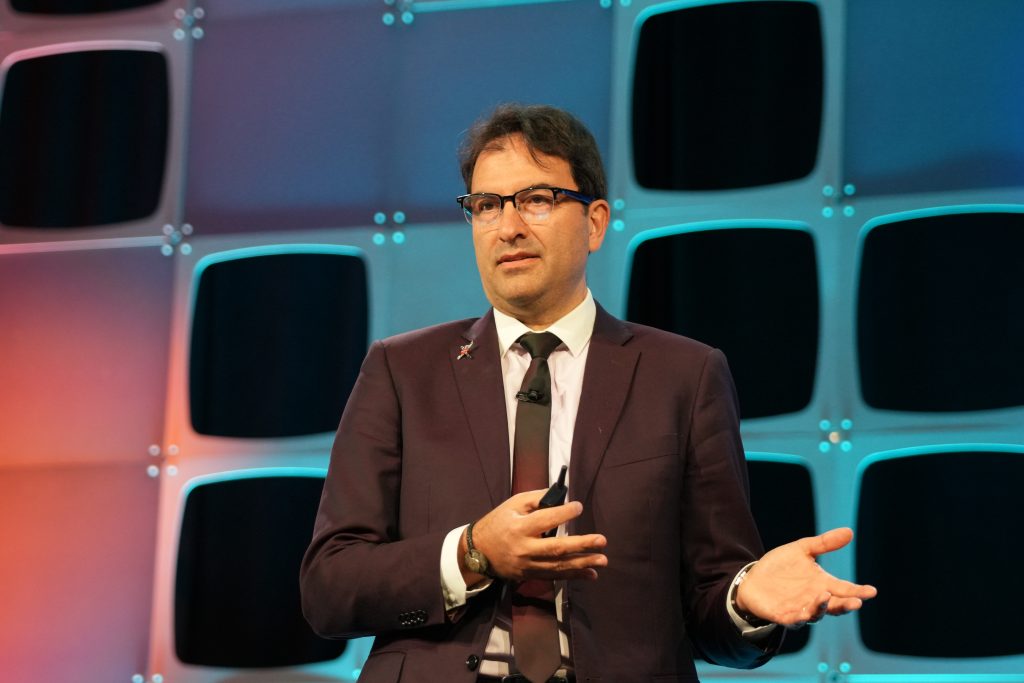
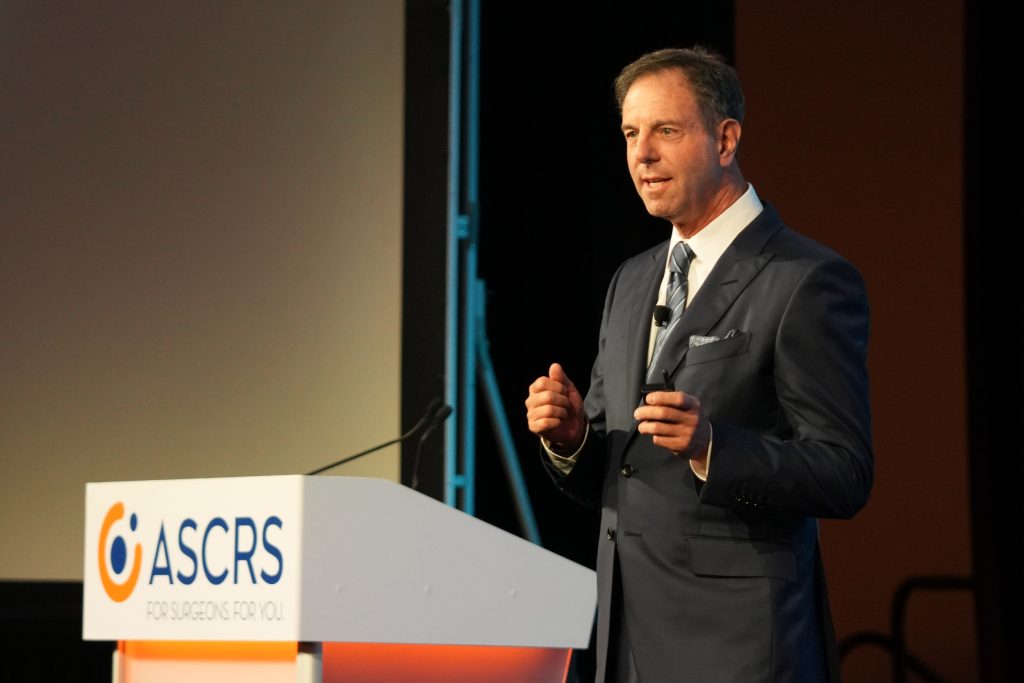
Kerry Solomon, MD, delivered the Cornelius D. Binkhorst, MD, Lecture on the ASCRS Main Stage on Saturday morning. His talk covered artificial intelligence in ophthalmology.
“Binkhorst believed the IOL would change cataract surgery forever,” Dr. Solomon said. “He was exactly right.”
Similarly, Dr. Solomon thinks AI is going to transform ophthalmology. “It’s going to change everything,” he said. While there is a lot of cynicism out there, he said everyone is already using AI, not just ChatGPT, in many aspects of their lives.
Source: ASCRS
We have another issue to solve that’s just around the corner, Dr. Solomon said, and that’s the projected workforce cap that’s coming. He noted that ophthalmology will be particularly impacted by this, and the financial aspect is another concern.
So what can be done to help with this? Dr. Solomon noted vertical integration, horizontal integration, physician extenders, and AI.
“We have to do something different,” he said, adding that simply seeing more patients won’t work. We have to find ways to do more with less, or there will be a patient access problem and quality care issues. Patients are demanding a high quality of care, and they deserve it.
AI can help with this, he said. AI is sophisticated software, and it’s not coming—it’s here. The question is no longer whether to adopt it but how quickly you can integrate it into practice, workflows, and patient care, Dr. Solomon said.
He then shared four ways to integrate AI into practice:
- Clinical documentation: He specifically mentioned the Cora Scribe (Nextech), where ambient AI captures the encounter in real time and helps reduce the documentation burden. He noted 45 minutes or more saved per clinic day, and the physician can be 100% present with each patient and cut down on after-hours charting.
- Surgical planning: Dr. Solomon mentioned the VERACITY (Zeiss), which offers AI-assisted preop planning for cataract and refractive surgery. It helps promote greater surgeon confidence at the OR table, he said. This helps improve refractive precision and predictability and decreases surprise refractive outcomes.
- Call center and patient engagement: Dr. Solomon noted Five9 and Luma. AI can handle inbound/outbound calls and scheduling/rescheduling. It can also provide automated reminders and follow-up messaging. This helps improve patient access and experience and decrease no-show rates. It also frees up staff capacity for complex needs.
- Revenue cycle management: Dr. Solomon noted Visionary for this, where AI reviews the note and confirms correct coding. It can catch discrepancies at the source, helps reduce revenue leakage, and accelerates reimbursement.
The common thread for all of this is it lets us do more with less, he said, the result of which is a better patient experience and higher conversion to premium IOLs, and this is what has to happen.
He also presented attendees with several specific calls to action:
- Test the AI products—really test them: Don’t just watch a demo. Sit down with the tool. Put your own data in. Push it until it breaks or surprises you.
- Then have your staff test them: He said it’s helpful to have technicians, scribes, front desk staff, and people who use these daily to test them. Their feedback matters more than yours.
- Resist the urge to quit early: It will feel slower at first. That’s the learning curve, not a failure. Every new tool in medicine felt that way, and he said to push through.
- Implement what makes sense: Dr. Solomon said you don’t have to adopt everything. Start with one workflow, document the impact, then expand.
- Give feedback to the makers: Companies building these tools need your clinical voice. Tell them what works, what doesn’t, and what you actually need.
Dr. Solomon’s lecture also discussed what’s coming in AI, as well as options being developed in robotics and emerging frontiers in AI and genomics.
Having a human in the loop is non-negotiable, he said. “We’re not looking to have these devices replace us. We’re looking to have them help us with what we do.”
Editors’ note: Dr. Solomon has no relevant financial disclosures.