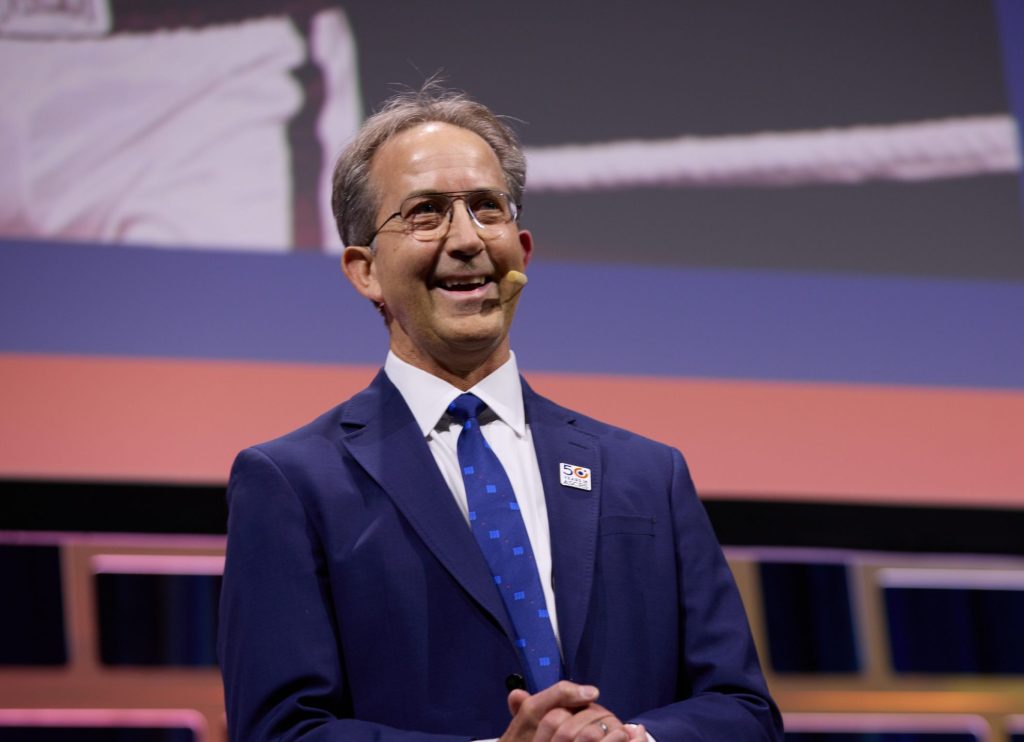
Nicole Fram, MD, and Elizabeth Yeu, MD, led the Ophthalmology Quicksand Chronicles symposium on Saturday afternoon, titled “Quicksand Chronicles: Pro Moves.”
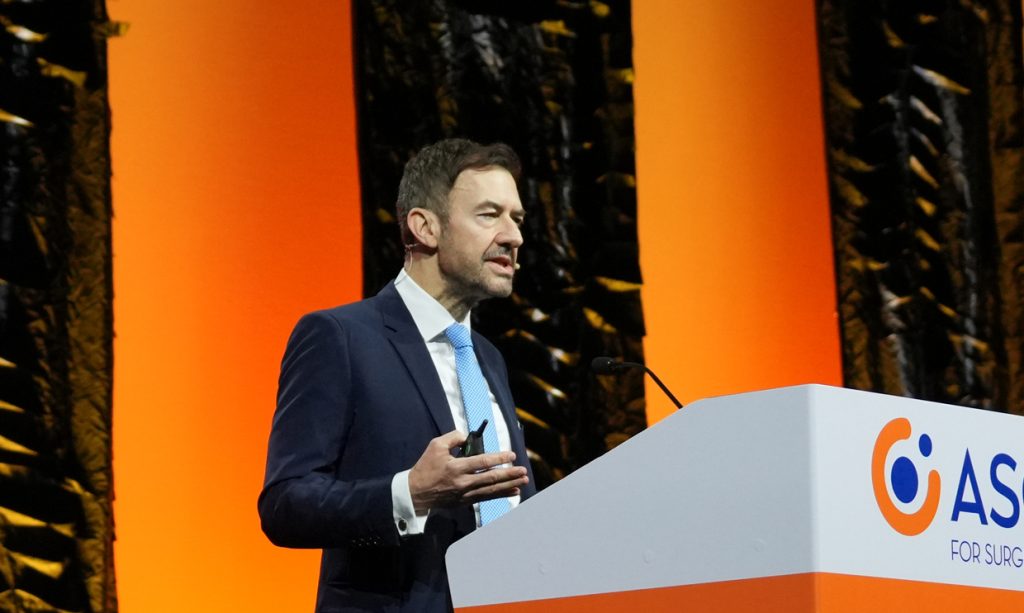
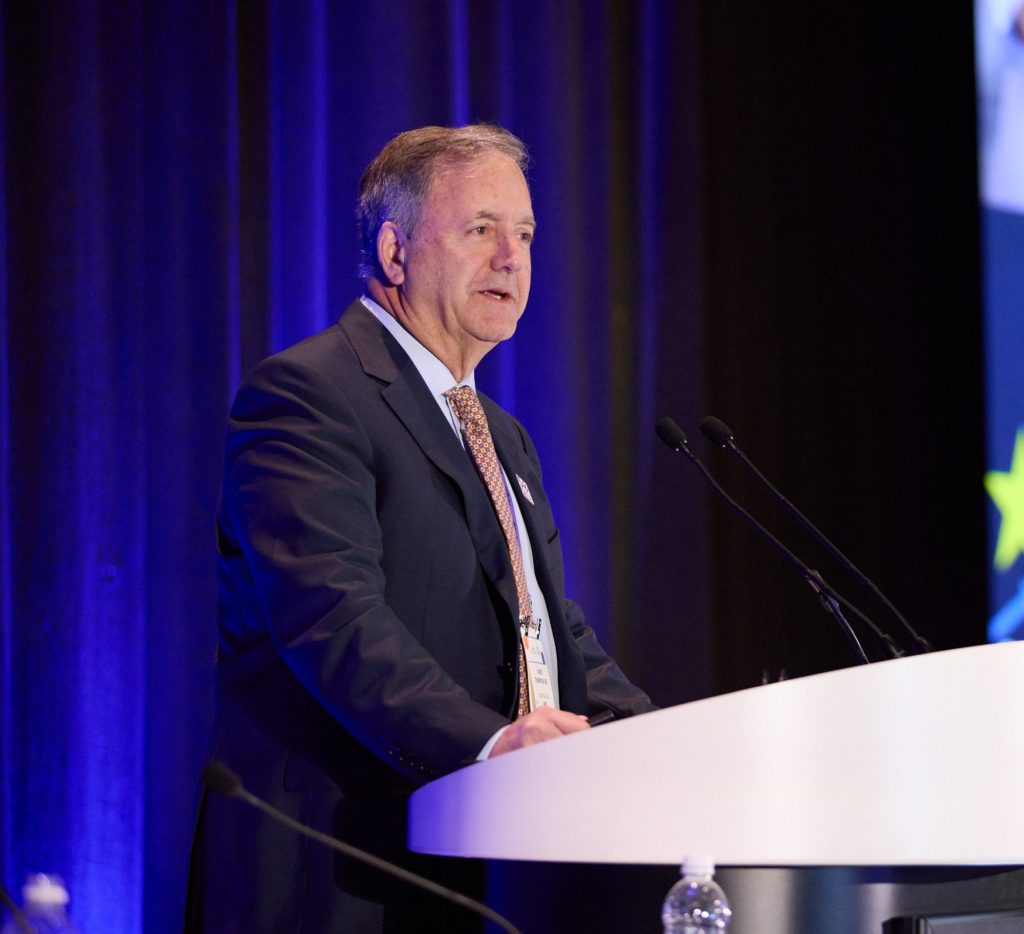
Sumit “Sam” Garg, MD, Nandini Venkateswaran, MD, and Arsham Sheybani, MD, served as presenters in the session. They shared cases, and panelists had the opportunity to pause the presenters at any time to dissect the case.
Source: ASCRS
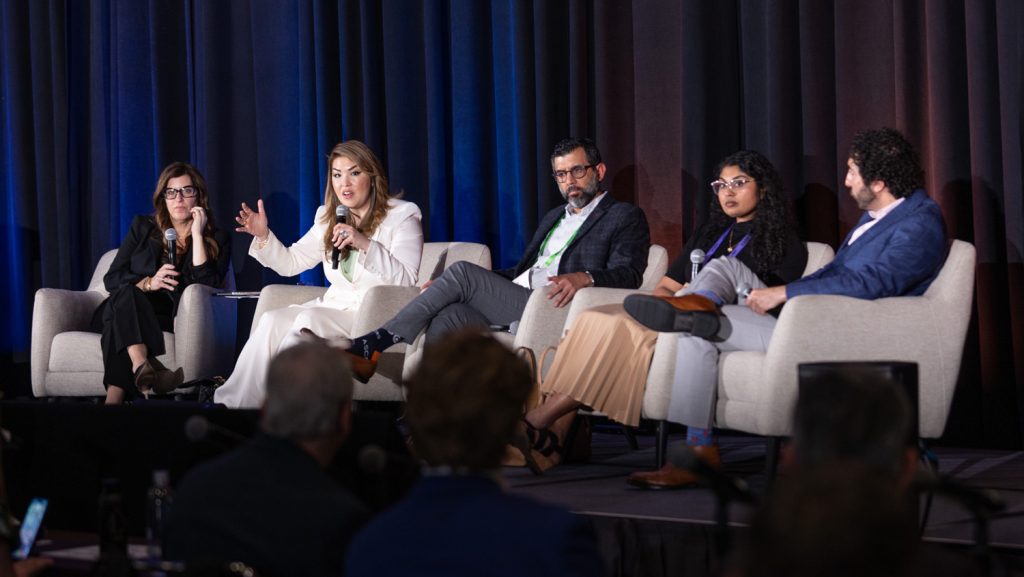
Panelists at the session included Brandon Ayres, MD, Douglas Koch, MD, Mitchell Weikert, MD, Kourtney Houser, MD, Michael Snyder, MD, Morgan Micheletti, MD, Sam Masket, MD, Sumitra Khandelwal, MD, and Thomas Samuelson, MD.
In Dr. Venkateswaran’s case, there was a 38-year-old patient who had previous surgery in his left eye and vitrectomy. However, she was performing surgery on the right eye. The eye had an axial length of 30, and he had three previous retinal surgeries: a scleral buckle with oil for giant retinal tear, then he had the oil removed, then a vitrectomy for retinal hole.
Dr. Venkateswaran was performing cataract surgery 3 months after the macular hole had been addressed, and she said, of course, she had booked it on a Friday afternoon.
At the beginning of the case, Dr. Ayres noted that there was already silicone oil in the anterior chamber, and Dr. Venkateswaran added trypan blue into the eye. Dr. Ayres was worried that the trypan blue could work itself back in the eye, noting that he has gotten himself into trouble with this in the past.
Dr. Yeu asked if Dr. Venkateswaran had a suspicion that there might have been capsular violation given the “fluffy” cataract, and she asked when she would consider the timing of trypan blue instillation when a patient isn’t well dilated.
Dr. Venkateswaran was not expecting posterior capsule violation in her case, and in terms of trypan blue timing, she thought the patient was dilated enough. But she noted in instances with less dilation, she probably would have stretched the pupil.
Dr. Yeu also pointed out that when there is PAS, particularly posterior synechiae and peripheral posterior synechiae, you might want to leave them alone and allow them to serve as artificial zonules, unless it’s getting in the way of your surgery.
Dr. Venkateswaran noted that she started lysing synechiae and using viscoelastic and was trying to ensure synechiae weren’t the only things holding the lens. She used a 25-gauge needle bevel down and aspirated a bit of the fluid.
Dr. Houser noted that she doesn’t usually like to go through the main incision for this but will instead use a clear corneal incision.
Other panelists discussed how they approach needle decompression, and Dr. Venkateswaran finished showing her case, describing other issues she encountered along the way, including creating a rhexis.
Dr. Sheybani shared a case where he ultimately got a cyclodialysis cleft. He was also going to be doing phaco in this case, but he was doing the angle surgery first.
Dr. Sheybani said the width of the cleft isn’t always indicative of how serious it is. Dr. Samuelson agreed that it depends on the severity of the glaucoma and said that he doesn’t recall ever creating a cleft and fixing it in the same session. He said he would try to figure out the extent and would proceed with phaco as you normally would and see what happens.
Dr. Sheybani said with a cleft, the IOP spike occurs because the trabecular meshwork shuts down. If you have buttress with the stent, it’s less likely.
He added that you could get a tiny sliver of a cleft that could still cause hypotony.
In this case, the cleft was large and looked deep. Dr. Sheybani said that he would agree with Dr. Samuelson 99% of the time and wouldn’t repair it, but this one looked really dark.
He proceeded with phaco, and while doing phaco, he noted it was difficult to maintain pressure. That’s the clue that you might get hypotony after.
Panelists continued to weigh in on Dr. Sheybani’s case as he showed how it progressed.