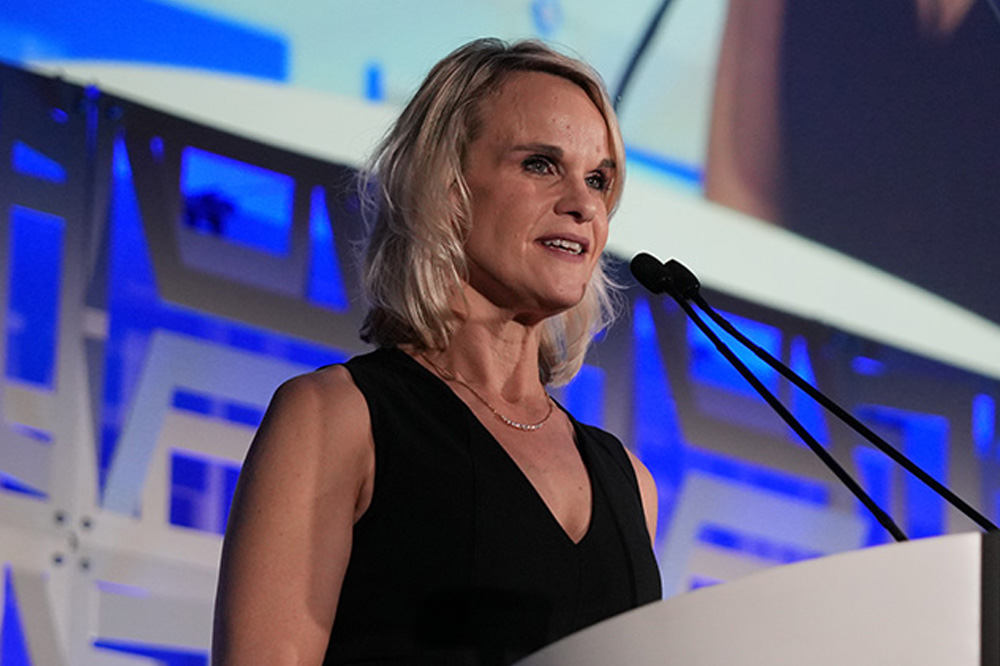
ASCRS Cornea Day concluded with a session titled, “Dry Eye Corner,” moderated by Michelle Rhee, MD, and Karolinne Rocha, MD, PhD.
Masih Ahmed, MD, discussed lid margin disease health. When we think about lid margin disease, you need to know pertinent anatomy. He mentioned the gray line, which gives a natural demarcation line between the anterior and posterior lamella.
The lid margin function plays a large role in tear film homeostasis. It provides the lipid component to prevent evaporation, reduces inflammation and cell apoptosis, and helps with maintaining tear film/refractive surface.
Dr. Ahmed noted classification of lid margin disease, which can be anterior or poster.
Anterior: seborrheic, infectious (staphylococcal), or Demodex
Posterior: meibomian gland dysfunction or rosacea blepharitis
He also shared some societal impacts, noting that symptomatic MGD worsens quality of life and causes increased anxiety and depression. The economic burden of dry eye disease is estimated to be $3.8 billion annually, and out of pocket costs for patients can exceed several thousands of dollars.
Lid margin health has an impact on surgical outcomes as well. He said that many patients who present for cataract surgery have some sort of meibomian gland dysfunction. It’s important to treat ahead of time to try to optimize the tear film and lids. Finally, he noted options in the toolbox of treatment options, which are numerous.
Alice Epitropoulos, MD, discussed innovations in diagnostics and in-office procedures. “As I’ve learned from Dr. Donnenfeld, the tear film is the most important refracting surface of the eye,” Dr. Epitropoulos said. It’s important to identify and manage tear film issues preoperatively. Unstable tear film results in unpredictable preop measurements, delayed healing, and suboptimal results postop. She also stressed the importance of treating and evaluating the resolution of dry eye disease before IOL calculations.
Dr. Epitropoulos noted that there is a high prevalence of dry eye in patients scheduled for cataract surgery, and they’re often asymptomatic, so this highlights how important screening is. You can’t treat dry eye until you diagnose.
Dr. Epitropoulos said the hallmark for accurate diagnosis remains a thorough history and careful clinical exam. She also noted that artificial intelligence (AI) is making headway in analyzing tear film and ocular surface.
When discussing in-office treatment options, Dr. Epitropoulos highlighted a 3-step approach for MGD, with lid margin hygiene, removal of the obstruction, and reduction/elimination of inflammation.
Relevant disclosures
Ahmed: None
Epitropoulos: None